Uma Thurman poison ivy redefined Hollywood thrillers

Published

Table of Contents

In 1997, Uma Thurman delivered one of her most haunting performances as Penny Lane in Poison Ivy, a psychological thriller that blurred the lines between beauty and danger. Unlike her iconic roles in Pulp Fiction or Kill Bill, Thurman’s portrayal of a botanist with a dark obsession challenged audiences to see vulnerability beneath the surface of a seemingly alluring character. The film, often overshadowed by Tarantino’s cult classics, became a cult favorite in its own right, sparking debates about femininity, toxicity, and the duality of human nature.

Poison Ivy arrived at a cultural crossroads when psychological thrillers dominated cinema, yet its exploration of obsession and duality set it apart. Thurman’s method acting—immersing herself in botany research and delving into the psychology of a character teetering on the edge of sanity—elevated the film beyond mere suspense. Behind the scenes, the production faced challenges that shaped its eerie atmosphere, from greenhouse set designs to a soundtrack that amplified the film’s unsettling romance. Meanwhile, the real-world plant Toxicodendron radicans—poison ivy—became a potent metaphor for the film’s themes, transcending its botanical identity to symbolize danger, beauty, and the hidden toxicity in relationships.

Uma Thurman poison ivy redefined Hollywood thrillers

Uma Thurman’s Unexpected Connection to Poison Ivy: Exploring the Iconic Role

Uma Thurman poison ivy redefined Hollywood thrillers

Uma Thurman’s portrayal of Penny Lane in Poison Ivy (1997) remains one of her most underrated yet fascinating performances—a stark contrast to her more widely celebrated roles as Beatrix Kiddo in Kill Bill (2003–2004) or Mia Wallace in Pulp Fiction (1994). While Thurman is often associated with action-heroine personas or cool, enigmatic characters, Poison Ivy offered a rare glimpse into her dramatic depth, showcasing her ability to embody psychological complexity and vulnerability. The film, directed by Kyle Henry and co-starring Drew Barrymore, marked a departure from Thurman’s typical repertoire, immersing her in a darkly surreal world of obsession, botanical symbolism, and feminist ambiguity. Critics initially dismissed Poison Ivy as a campy thriller, but over time, it has been reappraised as a cult classic that challenges gender norms and explores the duality of female desire. Thurman’s preparation for the role—blending method acting with meticulous research into botany and the psychology of toxic relationships—elevated Penny Lane from a mere villainess to a hauntingly compelling antiheroine.

Thurman’s Performance: A Study in Duality and Psychological Depth
Uma Thurman poison ivy redefined Hollywood thrillers

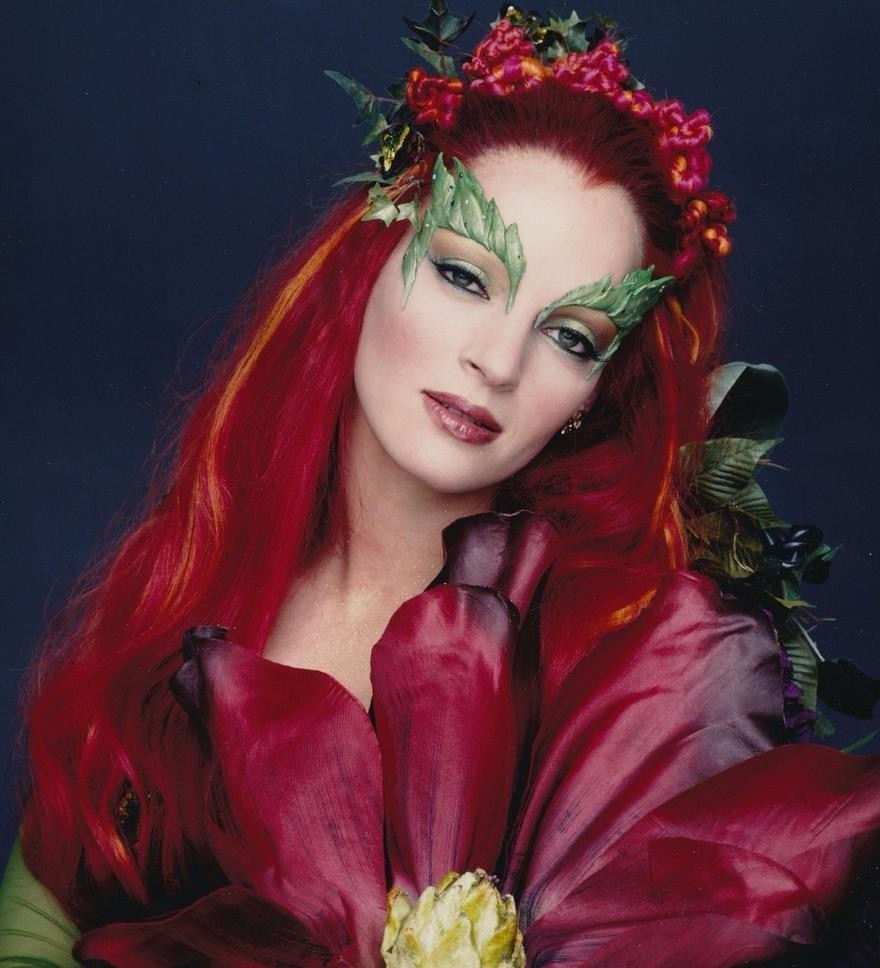
Uma Thurman’s portrayal of Penny Lane in Poison Ivy defies conventional categorization, blending elements of femme fatale, tragic heroine, and unhinged botanist into a single, mesmerizing character. Unlike her roles in Pulp Fiction or Kill Bill, where she exuded confidence and physicality, Thurman’s Penny Lane oscillates between elegance and madness, using her intelligence and charm as weapons while grappling with an obsessive fixation on plants—and a specific botanist, Dr. Michael Corleone (played by Tommy Lee Jones). The character’s duality is immediately evident in her costume design: she alternates between Victorian-inspired gowns (symbolizing refinement) and botanical motifs (ivy patterns, leaf prints), reinforcing the film’s themes of beauty and decay.

Critics at the time were divided. The New York Times dismissed the film as "a gothic mess", while Variety called it "a bizarre, uneven thriller" that struggled to sustain tension. However, Thurman’s performance was singled out for praise, with Entertainment Weekly noting her "chilling ability to shift between seduction and menace" without breaking a sweat. Audiences, particularly women, responded more favorably, drawn to Penny Lane’s unapologetic sexuality and intellectual prowess—a far cry from the passive victims of horror films from the era. Thurman herself later reflected on the role as "a chance to play someone who was both dangerous and deeply lonely", a sentiment that resonated with viewers who saw Penny Lane as a feminist icon in disguise: a woman who weaponizes her femininity while rejecting societal expectations of vulnerability.

Behind-the-Scenes: Thurman’s Method Acting and Research

Thurman’s preparation for Poison Ivy was far from conventional. To fully embody Penny Lane, she studied botany, visiting greenhouses and consulting with horticulturists to understand the biology of poison ivy—a plant central to the film’s metaphorical and literal themes. She also delved into psychological case studies of obsession, drawing parallels between Penny Lane’s fixation on plants and real-world examples of erotomania (a delusional belief in another’s romantic love). Thurman’s method acting extended to physical transformation: she gained weight for the role, adopting a slower, more deliberate gait to contrast with her usual effortless grace, and even practiced speaking in a slightly raspy voice to enhance Penny Lane’s unnerving allure.

Director Kyle Henry recalled that Thurman "immersed herself completely", even sleeping with ivy plants in her hotel room to heighten her connection to the character’s obsession. The film’s botanical sequences—where Penny Lane tends to her greenhouse with almost religious devotion—were shot with painstaking attention to detail, using real poison ivy plants (though safely contained) to create an atmosphere of beauty and peril. Thurman’s improvisational skills also shone during the film’s more surreal moments, such as the scene where Penny Lane whispers to her plants, blurring the line between human and flora. This level of commitment set Poison Ivy apart from typical 1990s thrillers, where performances often leaned toward stereotypical villainy or victimhood.

Comparative Analysis: Thurman’s Most Memorable Roles

Thurman’s filmography spans neo-noir, action, comedy, and psychological thrillers, but her roles can be categorized by genre, character archetype, and cultural impact. Below is a comparative table highlighting how Poison Ivy stands out among her most iconic performances:

td>1997

Film Year Character Genre Character Archetype Cultural Impact Key Themes
Pulp Fiction 1994 Mia Wallace Crime/Drama Enigmatic femme fatale Cemented Thurman’s status as a cool, quotable icon ("You're gonna need a bigger boat.") Fatalism, masculinity, existentialism
Kill Bill: Vol. 1 & 2 2003–2004 Beatrix Kiddo ("The Bride") Action/Revenge Action heroine, vengeful warrior Redefined female-led action cinema; became a feminist symbol Revenge, trauma, sisterhood
Poison Ivy 1997 Penny Lane Psychological Thriller/Horror Obsessive botanist/antiheroine Cult following; reappraised as a feminist and gothic thriller Toxicity, duality, female agency
Batman & Robin Poison Ivy (Poison Ivy) Action/Comedy Villainess (superhero film) Memorable but campy; solidified her as a comic-book antiheroine Sexualization of villainy, 1990s excess
Crimson Tide 1995 Captain Hart War/Drama Military officer Proved her range beyond romantic/comic roles Leadership, moral conflict

While Pulp Fiction and Kill Bill cemented Thurman’s legacy as a cool, action-oriented icon, Poison Ivy offered a rare exploration of psychological fragility and female obsession. Unlike Mia Wallace’s detached allure or Beatrix Kiddo’s physical prowess, Penny Lane is intellectually and emotionally volatile, making her one of Thurman’s most thematically rich roles. The film’s cult status has grown over time, particularly among feminist film scholars who interpret Penny Lane as a subversion of the "madwoman" trope—a woman who controls her own narrative rather than being a victim of it.

The Cultural Impact of Poison Ivy in the Late 1990s

Released in the same year as Titanic and The Truman Show, Poison Ivy arrived at a cultural crossroads where feminist cinema was evolving, and

Poison Ivy in Pop Culture: From Film to Fashion, Music, and Beyond

Beyond its botanical identity as Toxicodendron radicans, poison ivy has evolved into a potent cultural symbol—emblematic of danger, seduction, and even rebellion. The 1997 film Poison Ivy, starring Uma Thurman, amplified this mythos, transforming the plant from a mere nuisance into a multifaceted icon. Its influence permeated art, music, and fashion, while real-life encounters with the plant became fodder for media sensationalism. This section explores how poison ivy transcended its ecological roots to become a recurring motif in storytelling, aesthetics, and public consciousness, blending scientific reality with imaginative reinvention.

Cultural Reinvention of Poison Ivy as a Symbol Beyond Botany

Poison ivy’s cultural significance far exceeds its role as a skin-irritating vine. In literature and visual art, it often represents duality—beauty masking peril, temptation leading to ruin. The plant’s glossy green leaves and creeping habit mirror themes of deception, as seen in Gothic fiction and horror narratives. For instance, Edgar Allan Poe’s The Tell-Tale Heart (1843) and later works by H.P. Lovecraft evoke nature’s hidden malevolence, where poison ivy symbolizes latent, insidious threats. In modern cinema, the 1997 Poison Ivy film recontextualized the plant as a femme fatale, blending botanical realism with campy eroticism. The film’s iconic scene—Thurman’s character, Ivy, seducing a victim while draped in vines—cemented poison ivy as a metaphor for intoxicating yet destructive allure.

Artists like Zdzisław Beksiński, known for his surreal, nightmarish landscapes, frequently incorporated poison ivy into his paintings, where the plant symbolized decay and existential dread. Meanwhile, David Lynch’s Twin Peaks (1990–1991) used poison ivy as a visual motif to underscore the show’s themes of corruption and hidden truths. The plant’s presence in these works reflects a broader cultural fascination with nature’s dual role as both nurturer and harbinger of doom.

Real-Life Poison Ivy Incidents Linked to Famous Figures

Poison ivy’s irritating properties have inadvertently made headlines through the misadventures of celebrities, athletes, and historical figures. One of the most infamous cases involves Michael Jordan, whose 1993 NBA Finals victory parade was marred when he developed a severe poison ivy rash after touching a bush during a pre-game warm-up. The incident became a viral anecdote, illustrating how even legends are vulnerable to nature’s quirks. Similarly, Taylor Swift jokingly referenced poison ivy in interviews after a 2015 tour, where she claimed a vine had "declared war" on her skin, turning her experience into a relatable, humorous story.

Historically, Thomas Jefferson, the third U.S. president and botanist, documented his encounters with poison ivy in his notes, describing it as a "malignant herb" that plagued his Monticello estate. Jefferson’s scientific observations, though pragmatic, inadvertently contributed to the plant’s mythos as an adversarial force. In sports, Tiger Woods once cited poison ivy as a distraction during a 2008 Masters practice round, highlighting how the plant’s presence could disrupt even the most disciplined routines. These real-life encounters humanize poison ivy, framing it as an equal-opportunity irritant that transcends class or fame.

Musical References to Poison Ivy: Danger, Love, and Toxicity

Poison ivy’s metaphorical potential has inspired musicians to weave its imagery into lyrics, often as a symbol of toxic relationships or self-destructive tendencies. The Rolling Stones’ Sympathy for the Devil (1968) includes the line "I stuck around Saint-Ann’s, motivating the masses / I ate the poison ivy, I drank the wine of hassles," where the plant represents moral corruption and indulgence. Similarly, Nick Cave’s The Mercy Seat (1996) album features "Into My Arms," with lyrics like "I’m like a poison ivy, I’m like a snake," personifying the artist as a dangerous yet irresistible force.

In hip-hop, Kanye West’s 808s & Heartbreak (2008) touches on emotional toxicity with "Say You Will," where the line "I’m a poison ivy, you’re a fool for loving me" echoes Cave’s themes. Country music also embraces the motif; Miranda Lambert’s Gunpowder & Lead (2007) includes "Me and Charlie Talking," where poison ivy symbolizes a relationship that’s beautiful yet painful. The plant’s association with danger and allure makes it a versatile metaphor, allowing artists to explore complex emotions through nature’s lens.

Poison ivy’s aesthetic—its vibrant green leaves, intricate vine patterns, and gothic undertones—has inspired designers, tattoo artists, and makeup trends. Alexander McQueen’s Autumn/Winter 2010 collection featured dark, organic motifs reminiscent of poison ivy, blending high fashion with natural decay. The brand Rick Owens frequently incorporates thorny, vine-like textures into its leather designs, evoking the plant’s rugged beauty. Meanwhile, Gucci’s 2019 Cruise collection included a "Jungle" theme, where poison ivy-inspired prints appeared alongside animalistic patterns, merging luxury with primal imagery.

In body art, poison ivy tattoos have surged in popularity, often symbolizing resilience or hidden strength. The plant’s leaf clusters are frequently inked as tribal or botanical designs, with artists like Boston-based tattooist Amy Black specializing in nature-inspired pieces that mimic poison ivy’s creeping growth. Makeup artists have also drawn from the plant’s color palette, using deep emerald greens, burnt oranges, and charcoal blacks to create "poison ivy-inspired" looks for editorial shoots or Halloween themes. Even Kylie Jenner’s 2017 makeup line included a "Poison Ivy" eyeshadow shade, capitalizing on the plant’s association with danger and glamour.

Comparative Analysis: Poison Ivy in Film vs. Other Media

The portrayal of poison ivy varies significantly across media, reflecting genre conventions and creative interpretations. Below is a comparative table contrasting its depiction in Poison Ivy (1997) with other notable works:

Media Portrayal of Poison Ivy Symbolism/Themes Key Scene/Example
Poison Ivy (1997 Film) A seductive, vengeful woman who manifests as a living vine. Her touch causes rashes, mirroring her emotional toxicity. Femme fatale, revenge, sexual danger, campy horror-comedy. Thurman’s character strangling victims with vines while whispering "You shouldn’t have touched me."
Batman: The Animated Series (1992) A literal, malevolent plant used by villains like Hush to trap Batman, representing Gotham’s corrupting influence. Urban decay, environmental horror, psychological manipulation. Episode "Hush" (2000), where poison ivy vines ensnare Batman in a greenhouse.
Gotham (2014–2019) Depicted as a noxious weed in Gotham’s slums, symbolizing neglect and systemic rot. Class struggle, urban blight, moral corruption. Season 2, where Court of Owls members use poison ivy as a metaphor for Gotham’s hidden poisons.
Silent Hill 2 (2001 Video Game) A recurring motif in the game’s nightmarish forest, representing guilt and repressed trauma. Psychological horror, existential dread, nature as a mirror of the mind. Pyramid Head’s lair, where poison ivy-choked trees line the path.
Comics: Green Arrow (1

The Science of Poison Ivy: Decoding the Plant’s Biology, Toxicity, and Ecological Impact

Poison ivy (Toxicodendron radicans) is one of nature’s most infamous plants, renowned for its potent allergic response and widespread presence across North America. Beyond its cultural notoriety, poison ivy’s biological mechanisms—from its chemical defenses to its ecological adaptability—make it a fascinating subject of study. Understanding its botanical characteristics, toxicity triggers, and ecological role not only demystifies its dangers but also highlights its unexpected contributions to disturbed ecosystems. This exploration delves into the plant’s scientific intricacies, from identification and immune reactions to medical interventions and ecological significance, while dispelling common misconceptions.

Botanical Classification and Geographical Distribution of Toxicodendron radicans

Poison ivy belongs to the Anacardiaceae family, which also includes cashews and mangoes, and is classified under the genus Toxicodendron—a group of plants infamous for producing urushiol, the oil responsible for allergic contact dermatitis. Toxicodendron radicans exhibits significant morphological variations depending on its growth form: western poison ivy (a climbing vine with aerial rootlets), eastern poison ivy (a shrub or vine with three-leaf clusters), and southern poison ivy (a woody vine with glossy leaves). These variations adapt to regional climates, with eastern poison ivy thriving in the humid forests of the eastern U.S., western varieties dominating arid regions like the Southwest, and southern types flourishing in the Southeast’s warmer, wetter conditions. The plant’s geographical range extends across North America, from Canada’s southern provinces to Mexico, with isolated populations in the Caribbean. Poison ivy favors disturbed habitats—such as forest edges, roadsides, and urban areas—where it outcompetes native flora due to its aggressive growth and tolerance for poor soil conditions. Its ability to thrive in both shaded and sunny environments further cements its dominance in secondary succession, often colonizing areas after fires or logging.

Visual Identification Guide: Differentiating Poison Ivy from Harmless Look-Alikes

Accurate identification is critical to avoiding exposure, as poison ivy’s "leaves of three" motto underscores its most distinctive feature. However, several harmless plants mimic this pattern, leading to misidentification. Below are key visual cues and a comparative analysis to distinguish poison ivy from common look-alikes:
"Leaves of three, let it be!" —The iconic rhyme emphasizing poison ivy’s trifoliate leaves, though exceptions exist in juvenile or deformed forms.
  1. Leaf Arrangement and Shape Poison ivy’s leaves grow in clusters of three (trifoliate), with smooth or slightly toothed edges. The middle leaf typically attaches via a longer stem (petiole), while the side leaves have shorter stems. Leaf color varies seasonally: green in spring/summer, red or orange in autumn, and brown in winter. Look-alikes:
    • Virginia creeper (Parthenocissus quinquefolia): Five leaflets (not three) arranged palmately, often mistaken for poison ivy but harmless.
    • Boxelder (Acer negundo): Compound leaves with three to seven leaflets, but the central leaflet lacks a longer petiole.
    • Toxicodendron diversilobum (Pacific poison oak): Lobed leaves resembling oak, but its "hairy" stems and western range differentiate it.
  2. Stem and Bark Characteristics Young stems are hairless and greenish, while mature vines develop a woody, grayish-brown bark with fibrous ridges. Climbing varieties produce aerial rootlets (adventitious roots) to attach to trees or rocks. Key distinction: Poison ivy stems lack the "hairs" found on boxelder or the thorns of some vines like Smilax (greenbrier).
  3. Berries and Fruit Female plants produce white, waxy berries in clusters (drupes), maturing in late summer to early autumn. These berries are toxic to humans and wildlife, though birds like the cedar waxwing can consume them without harm. Note: Poison ivy berries are not the same as the edible Toxicodendron succedaneum (lacquer tree) berries, which are unrelated.
  4. Growth Habits Poison ivy exhibits three primary growth forms:
    • Vine: Climbs via aerial rootlets, often forming dense mats on trees or fences.
    • Shrub: Bushy, low-growing forms common in open fields.
    • Ground Cover: Prostrate growth in shaded, moist areas.
    Harmless mimics like Rhus typhina (staghorn sumac) grow in shrubby clusters but lack the trifoliate leaf pattern.
Pro Tip for Identification: Run your finger along the stem. Poison ivy’s stems are smooth; sumac and boxelder stems often feel hairy or rough.

Urushiol: The Chemical Trigger Behind Allergic Reactions

The allergenic compound in poison ivy, urushiol (C21H30O2), is a colorless, oily resin found in all parts of the plant—leaves, stems, roots, and berries. Exposure occurs through direct contact, smoke inhalation (e.g., burning poison ivy), or indirect transfer via tools, pets, or clothing. Urushiol triggers an immune response in 80–85% of exposed individuals, though severity varies due to genetic predisposition, exposure duration, and skin sensitivity. The biochemical process involves:
  1. Initial Contact: Urushiol penetrates the skin within minutes, binding to proteins in the epidermis. Even microscopic amounts (5 nanograms) can provoke a reaction.
  2. Immune System Activation: The body recognizes urushiol as a foreign antigen, prompting T-cells to release cytokines (e.g., interferon-gamma), which inflame the skin.
  3. Delayed Hypersensitivity: Symptoms appear 12–48 hours post-exposure, peaking at 72 hours. The rash (dermatitis) manifests as red, itchy blisters filled with serum, a hallmark of Type IV hypersensitivity.
  4. Resolution Phase: Without treatment, the rash subsides in 1–3 weeks, but urushiol can remain active on surfaces for years, requiring thorough decontamination.
Why Some People Are More Susceptible: Genetic factors influence the immune system’s reactivity to urushiol. Studies suggest that individuals with a history of atopic dermatitis or asthma may experience more severe reactions due to heightened immune sensitivity.

Medical Treatments: From Home Remedies to Advanced Therapies

Poison ivy dermatitis lacks a cure, but treatments aim to alleviate symptoms and prevent secondary infections. Approaches range from self-care measures to medical interventions for severe cases:
  1. Immediate Post-Exposure Protocol
    "The 10-Minute Rule": Wash exposed skin with cold water and soap (e.g., Tek®, Folex®) within 10 minutes to remove urushiol before it binds to proteins. Avoid hot water, as it may open pores and increase absorption.
    • Use rubbing alcohol (70% isopropyl) or dish soap to clean tools, pets, or clothing contaminated with urushiol.
    • Avoid scratching, as it worsens inflammation and risks bacterial infections (e.g., Staphylococcus).
  2. Home Remedies for Mild to Moderate Rashes
    Evidence-Based Options: While no remedy removes urushiol, these alleviate symptoms:
    1. Topical Treatments:
      • Calamine lotion or hydrocortisone cream (1%) to reduce itching and inflammation.
      • Colloidal oatmeal (e.g., Aveeno) soothes skin via anti-inflammatory compounds.
      • Baking soda pastes or cool compresses with black tea (tannins) may reduce redness.
    2. Oral Antihistamines:
      • Diphenhydramine (Benadryl) or loratadine (Claritin) to counteract histamine-induced itching.
      • Avoid first-generation antihistamines in children due to sedative effects.
      • Uma Thurman’s Career Trajectory: The Role of Poison Ivy in Shaping Her Legacy Uma Thurman’s ascent in Hollywood during the 1990s was nothing short of meteoric, but her role as Ivy Walker in Poison Ivy (1997) marked a pivotal moment—not just in her filmography, but in how she was perceived by audiences and critics. While she had already cemented her status as a leading actress with Pulp Fiction (1994) and Batman & Robin (1997), Poison Ivy represented a departure from her established archetypes. The film, a psychological thriller with a feminist edge, allowed Thurman to showcase versatility beyond the iconic roles that defined her early career. This section explores how Poison Ivy intersected with Thurman’s broader trajectory, examining her collaborations, critical reception, and the evolution of her on-screen persona.

        Career Milestones Leading to Poison Ivy: From Pulp Fiction to Mainstream Stardom

        Thurman’s breakthrough role as Mia Wallace in Quentin Tarantino’s Pulp Fiction (1994) catapulted her into the Hollywood stratosphere, earning her an Academy Award nomination for Best Supporting Actress. The role redefined her career, shifting her from a relatively unknown actress to a sought-after star. Following Pulp Fiction, she embraced a mix of commercial ventures and indie projects:
      • 1995–1996: Thurman balanced blockbusters like The Truth About Cats & Dogs (1996) with arthouse films such as The Craft (1996), further diversifying her image. Her performance in The Craft, a supernatural thriller about teenage witches, showcased her ability to embody complex, morally ambiguous characters—a trait that would later define Ivy Walker.
      • 1997: The year of Poison Ivy saw Thurman at a crossroads. She had already proven her range, but the film allowed her to explore a role that was intellectually demanding, visually striking, and thematically bold, moving away from the glamour of Batman & Robin (1997) or the edginess of The Craft.
      • Her decision to take on Poison Ivy was strategic, reflecting a desire to distance herself from typecasting while still engaging with mainstream cinema. The film’s blend of eroticism, psychological tension, and feminist undertones aligned with Thurman’s growing reputation as an actress unafraid to tackle unconventional material.

        Decade-by-Decade Breakdown: How Poison Ivy Influenced Thurman’s Role Choices

        Thurman’s career can be segmented into distinct phases, each shaped by her experiences with Poison Ivy and its aftermath. Below is a decade-by-decade analysis of how the film influenced her trajectory:
        "Poison Ivy was a turning point because it proved I could do something completely different from what people expected. It wasn’t just another pretty face—it was a role that required intelligence, vulnerability, and a certain darkness."* — Uma Thurman, The Guardian, 2017
      • 1990s: The Rise and Reinvention
      • Pre-Poison Ivy (1994–1996): Thurman’s roles were a mix of genre-defying performances (Pulp Fiction) and mainstream appeal (The Truth About Cats & Dogs*). She was seen as a cool, enigmatic star, but her choices were still somewhat constrained by studio expectations.
      • Post-Poison Ivy (1998–1999): After the film’s release, Thurman prioritized independent and foreign films, signaling a shift toward artistic integrity over box-office guarantees. Projects like The Holy Man (1998) and The Last Seduction (1994, but released later) reflected this trend, though neither achieved the same cultural impact as Poison Ivy.
      • Key Observation: The film’s critical and commercial underperformance (despite its cult following) did not deter Thurman from seeking more challenging roles, contrary to what studios might have predicted.
      • 2000s: The Independent Film Era
      • Thurman’s collaborations with directors like Wes Anderson (Rushmore, 1998; The Royal Tenenbaums, 2001) and Gus Van Sant (Elephant, 2003) became defining, proving her commitment to indie cinema. Poison Ivy had already demonstrated her ability to carry a visually and thematically rich film, a trait that resonated with these directors.
      • Notable Shift: By the early 2000s, Thurman was less associated with blockbusters, instead becoming a darling of the indie scene. Films like The Life Aquatic with Steve Zissou (2004) and Kill Bill (2003–2004) further cemented her reputation as an actor’s actor.
      • 2010s–Present: Legacy and Selectivity
      • Thurman’s later career has been marked by highly selective projects, often with iconic directors (e.g., The Grand Budapest Hotel, 2014; Aquaman, 2018). Poison Ivy remains a touchstone for her ability to balance commercial appeal with artistic ambition.
      • Cultural Re-evaluation: As Poison Ivy gained cult status, Thurman’s early 1990s roles were reassessed, with critics noting her underappreciated depth in films like The Craft and Poison Ivy. This reappraisal influenced her later choices, such as her return to psychological thrillers (The Lovely Bones, 2009).
      • Filming Poison Ivy: Thurman’s Reflections on the Set and Collaborations

        Thurman’s experience filming Poison Ivy was intense and transformative, both professionally and personally. Directed by John Schlesinger (Midnight Cowboy, 1969), the film required her to embody Ivy Walker—a botanist with a dark secret, a seductive demeanor, and a tragic backstory. Thurman later described the role as one of her most physically and emotionally demanding, due to the film’s erotic tension and psychological depth.
      • Working with John Schlesinger
      • Thurman praised Schlesinger’s directorial precision, noting that he created an atmosphere where she could fully immerse herself in the character. Unlike the fast-paced, dialogue-driven sets of Pulp Fiction, Poison Ivy required subtle, layered performances, which she found intellectually stimulating.
      • Anecdote: Thurman recalled that Schlesinger encouraged her to experiment with Ivy’s vulnerability, pushing her to explore the character’s duality—both alluring and haunted. This approach influenced her later roles, particularly in films where internal conflict was central.
      • Co-Starring with Sandra Bullock
      • Thurman and Bullock’s on-screen chemistry was a highlight of the film. Thurman described Bullock as professional yet playful, creating a dynamic that felt authentic and unpredictable.
      • Behind-the-Scenes: The two reportedly bonded over their shared love of acting, discussing character motivations at length. Bullock’s portrayal of Drew Lyle added a feminist counterpoint to Ivy’s story, which Thurman appreciated.
      • Challenges of the Role
      • The film’s erotic and psychological elements required Thurman to navigate complex emotions on set. She later admitted that balancing Ivy’s seductiveness with her tragic depth was a delicate process, one that demanded both technical skill and emotional honesty.
      • Physical Transformation: To embody Ivy, Thurman underwent a significant physical change, including weight gain and a shift in posture, which she found liberating. This willingness to transform her appearance became a hallmark of her later roles (e.g., The Life Aquatic).
      • Box Office and Critical Reception: Poison Ivy’s Impact on Thurman’s Industry Standing

        Poison Ivy was a critical and commercial mixed bag upon release, but its cult following has since redefined its legacy. Below is a comparison of its performance against Thurman’s other films during the same era:
        Film Year Budget Box Office (Worldwide) Critical Reception (Rotten Tomatoes) Thurman’s Role Perception
        Pulp Fiction 1994 $

        The Psychology of Poison Ivy: Obsession, Duality, and the Dark Side of Beauty

        John Waters’ Poison Ivy (1992) transcends its campy surface to dissect the fractured psyche of its protagonist, Penny Lane, played by Uma Thurman. The film employs Penny as a vessel for exploring psychological duality—where beauty, obsession, and destruction intertwine. Through clinical lenses, the character embodies traits of narcissistic personality disorder, dissociation, and even Stockholm syndrome, while her relationship with toxic masculinity and societal expectations mirrors real-world dynamics of manipulation and codependency. The greenhouse, her sanctuary, becomes a metaphor for the controlled chaos of her mind, where nature’s beauty parallels her own—both alluring and lethal. Penny Lane’s psychological profile reveals a character suspended between victimhood and villainy, a duality that challenges audiences to question where empathy ends and revulsion begins. Her behavior aligns with narcissistic traits, particularly grandiose self-image and lack of empathy, as seen in her manipulation of men and her detachment from societal consequences. Simultaneously, her dissociative episodes—such as her trance-like states in the greenhouse—suggest a coping mechanism for trauma, possibly stemming from childhood neglect or abuse. These psychological underpinnings are not merely cinematic devices but reflections of real-world conditions, such as complex PTSD or borderline personality traits, where identity fragmentation leads to volatile emotional responses.

        Clinical Breakdown of Penny Lane’s Psychological Traits

        Penny Lane’s character can be analyzed through three primary psychological frameworks: narcissistic personality disorder (NPD), dissociation, and Stockholm syndrome. Each framework offers insight into her motivations and behaviors, which oscillate between charm and cruelty. Narcissistic Traits and Manipulation Penny exhibits secondary narcissism, a term used to describe individuals who develop narcissistic traits as a defense mechanism against underlying insecurity or trauma. Her seductive yet predatory behavior toward men—particularly her manipulation of wealthy suitors like Drew (Dwight Yoakam)—mirrors real-world cases of narcissistic abuse, where victims are groomed into dependency. Clinical studies on narcissistic relationships, such as those by Karyl McBride in Will I Ever Be Good Enough?, highlight how manipulators exploit trust to maintain control, a dynamic Penny weaponizes with precision. Dissociation as a Coping Mechanism Penny’s trance-like states in the greenhouse align with depersonalization/derealization disorder, where individuals detach from reality as a response to stress or trauma. Her dissociation serves as an escape from emotional pain, particularly her codependent attachment to her mother (played by Joan Severance). This mirrors real-world cases of trauma bonding, where individuals remain in abusive relationships due to intermittent reinforcement of affection or survival instincts. The greenhouse, her "safe space," becomes a symbolic womb, a regression to a place of perceived control amid chaos. Stockholm Syndrome and Trauma Bonding Penny’s relationship with her mother exhibits Stockholm syndrome, where victims develop positive feelings toward their abusers. Her mother’s emotional neglect and toxic enablement create a cycle of dependency, reinforcing Penny’s belief that she is both victim and perpetrator. Research by Dr. Patricia Love on trauma bonds suggests that such dynamics thrive on intermittent reinforcement—moments of affection followed by neglect—mirroring Penny’s push-and-pull with her mother and later, her male victims.

        Case Study: Penny Lane’s Obsession Compared to Real-World Fixation

        Penny’s fixation on control and destruction parallels real-world cases of obsessive relational intrusion (ORI) and stalking behavior, where individuals become consumed by a desire to dominate another person’s life. One notable case is Hervey Cleckley’s study of the "mask of sanity," where manipulators appear charming yet lack genuine emotional connection—a trait Penny embodies. Her methodical poisoning of men mirrors filicidal or homicidal fixation, such as the case of Dennis Nilsen, who murdered multiple men under pretense of affection before disposing of their remains. A deeper comparison lies in erotomania, a delusional belief that another person is in love with the individual, often seen in stalking cases. Penny’s delusional attachment to Drew, despite his clear disinterest, reflects this pathology. The film’s portrayal of her gaslighting—convincing herself and others that her actions are justified—aligns with malignant narcissism, a subset of NPD characterized by sadism, paranoia, and lack of remorse.

        Therapeutic Perspectives on Penny Lane’s Mental Health

        From a therapeutic standpoint, Penny Lane’s character could be interpreted through trauma-informed care and psychodynamic theory. Her split identity—between the innocent "Ivy" and the vengeful "Penny"—suggests ego fragmentation, a defense mechanism where the psyche compartmentalizes traumatic experiences. Psychiatrist Judith Herman’s work on trauma outlines how survivors may oscillate between perpetrator and victim roles, a cycle Penny perpetuates. Codependency and Enmeshment Penny’s relationship with her mother exemplifies enmeshment, a term from family systems theory describing overly dependent, emotionally fused relationships. Her inability to establish healthy boundaries stems from this dynamic, reinforcing her self-destructive behaviors. Therapeutically, dialectical behavior therapy (DBT)—developed by Marsha Linehan—could address her emotional dysregulation and self-harm tendencies, though her character lacks the capacity for self-reflection. The Role of Beauty as a Weapon and Shield Penny’s hyper-femininity serves as both a protective mask and a tool of manipulation. Feminist psychologist Susan Forward discusses how women in abusive relationships often use charm and compliance to survive, a tactic Penny employs to disarm her victims. However, her beauty also isolates her, as society’s fixation on her appearance distracts from her psychological instability—a critique of how femininity is policed and weaponized.

        Symbolism of Duality: Beauty and Destruction in Penny Lane

        The film’s visual and thematic duality reinforces Penny’s psychological state. Her greenhouse, a controlled environment teeming with poisonous plants, mirrors her dual nature: nurturing yet lethal. The contrast between her floral dresses and venomous actions symbolizes the Janus-faced nature of human psyche, where warmth and cruelty coexist. Light and Shadow Imagery Cinematographer Edward Lachman uses high-contrast lighting to emphasize Penny’s duality—her face illuminated in innocence, while her hands (tools of destruction) remain in shadow. This technique aligns with Carl Jung’s concept of shadow self, where repressed traits manifest in destructive behaviors. The film’s urban decay—crumbling buildings, peeling paint—further amplifies her internal collapse, suggesting that her beauty is a facade for decay. The Poison Ivy Plant as a Metaphor Botanically, Toxicodendron radicans (poison ivy) thrives in disturbed ecosystems, much like Penny’s psyche. Its resilience and toxicity parallel her ability to survive and harm, while its clinging vines symbolize her inability to detach from her victims. The plant’s allergic reaction—a delayed, severe response—mirrors the escalation of Penny’s violence, which only manifests after trust is established.

        Character Arc Timeline: Penny Lane’s Emotional and Behavioral Progression

        Penny’s arc can be divided into four stages, each marked by shifts in her psychological state and behavioral patterns.
        1. Stage 1: The Innocent Victim (Childhood to Early Adulthood) Penny’s early life is defined by emotional neglect and mother’s enmeshment. Her dissociation begins as a coping mechanism, and she develops parasitic attachment behaviors, relying on men for validation. Her beauty becomes a survival tool, masking her insecurity.
        2. Stage 2: The Seductress (Awakening of Narcissistic Traits) After her mother’s death, Penny embodies her mother’s voice, adopting a predatory charm. She targets wealthy men, using her allure to control and exploit. Her first poisoning of a suitor marks her transition from victim to perpetrator.
        3. Stage 3: The Unhinged Manipulator (Escalation of Violence) Penny’s obsession with Drew pushes her into delusional fixation. She gaslights him, convincing herself—and him—that their relationship is reciprocal. Her dissociation worsens, leading to violent outbursts, including the murder of her mother’s lover

          Behind the Scenes: Filming Poison Ivy with Uma Thurman

          The 1997 neo-noir romantic thriller Poison Ivy remains a cult classic, largely due to its atmospheric tension, magnetic performances, and visually striking direction by Paul Verhoeven. However, the journey from script to screen was fraught with creative and logistical hurdles that ultimately shaped the film’s eerie, hypnotic aesthetic. Behind the camera, the production team faced script revisions, budget constraints, and technical challenges that demanded innovative solutions. Meanwhile, Uma Thurman’s transformation into the enigmatic and volatile Penny Lane required meticulous attention to costume, makeup, and physical performance. The film’s soundtrack and cinematography were equally pivotal, blending psychological unease with romantic allure. From the claustrophobic greenhouse sets to the precise choreography of Thurman’s close-ups, every element was designed to immerse the audience in a world where beauty and danger intertwine.

          Pre-Production Challenges and Creative Compromises

          The development of Poison Ivy was marked by significant script revisions, casting debates, and budgetary limitations that influenced the film’s final tone. Initially, the project was conceived as a straightforward romantic thriller, but early drafts were deemed too conventional. Screenwriter Tom Toporow and director Paul Verhoeven collaborated extensively to refine the script, emphasizing psychological duality and the blurred line between obsession and love. Casting proved equally contentious; Thurman was not the first choice for the role of Penny Lane. Producers initially considered more established actresses, but Thurman’s raw intensity and ability to convey both vulnerability and menace made her the ideal fit. Budget constraints further shaped the production, particularly in securing locations and designing sets. The greenhouse, a central setting, required a delicate balance between realism and stylization, leading to creative adaptations of existing spaces. The film’s budget was reportedly around $15 million, a modest sum for a studio-backed thriller in the late 1990s, which necessitated resourceful problem-solving. For instance, the apartment interiors were designed to appear luxurious yet claustrophobic, achieved through strategic lighting and minimalist set decoration. Verhoeven’s vision for the film’s aesthetic—dark, moody, and visually oppressive—clashed with studio expectations for a more conventional romantic drama. To align the project with his creative goals, Verhoeven insisted on a slower pacing and a focus on atmospheric detail over action, a decision that initially worried financiers but later became a hallmark of the film’s success.

          Day-in-the-Life Breakdown: Key Scenes and Technical Execution

          Filming Poison Ivy was a meticulously orchestrated process, with each scene requiring precise technical execution to achieve the desired psychological impact. The greenhouse sequences, in particular, were shot over multiple days, with the crew working around natural light cycles to maintain consistency. These scenes were filmed using a Steadicam and handheld cameras to create an unsettling, immersive perspective, as if the audience were trapped alongside the characters. Lighting was minimal yet strategic; soft, diffused light filtered through the greenhouse glass to cast an ethereal glow, while shadows were accentuated to heighten tension. Thurman’s close-up shots were among the most challenging to execute. Verhoeven insisted on extreme close-ups of her face, particularly during emotional or ambiguous moments, to emphasize Penny Lane’s psychological volatility. These shots were often lit with practical lights and subtle backlighting to create a halo effect, symbolizing the character’s dual nature—both alluring and dangerous. The camera frequently employed slow push-ins during intimate scenes, such as the greenhouse confrontation with Drew Barrymore, to amplify the sense of inescapable closeness. The crew also utilized long takes in certain sequences to maintain a sense of realism, avoiding the artificiality of rapid cuts.

          Costume and Makeup Design: Reflecting Penny Lane’s Psychological State

          Penny Lane’s wardrobe and appearance were carefully curated to reflect her shifting emotional states, oscillating between polished sophistication and disheveled vulnerability. Costume designer Linda M. Bassett collaborated closely with Thurman to create a look that was both visually striking and psychologically revealing. Early in the film, Penny is often seen in structured, high-necked blouses and tailored skirts, conveying an air of controlled elegance. However, as her instability grows, her outfits become increasingly disheveled—loose blouses, unbuttoned shirts, and tousled hair—symbolizing her unraveling psyche. Makeup artist Steve Prouty played a crucial role in enhancing Thurman’s features to convey Penny’s duality. For scenes where Penny appears composed, her makeup was subtle yet refined, with a natural flush and defined brows to emphasize her allure. In contrast, during moments of distress or aggression, her makeup was intensified with darker eye shadows and smudged lipstick, creating a stark, almost grotesque contrast. The transition between these looks was gradual, mirroring the character’s internal struggle. Thurman’s ability to physically transform on set—switching between poised and unhinged—was a testament to her dedication to the role.

          Soundtrack and Score: Enhancing Tension and Romance

          The soundtrack of Poison Ivy is a masterclass in using music to manipulate emotion, blending romantic melodies with dissonant undertones to create unease. Composer Geoffrey Burgon crafted a score that oscillates between haunting strings, pulsating percussion, and eerie synths, reinforcing the film’s themes of obsession and danger. One of the most notable tracks is "The Greenhouse," a slow, building crescendo of strings that mirrors the claustrophobic tension of the setting. The score often employs microtonal dissonance, where notes are slightly out of tune, to evoke a sense of psychological unease. The film’s use of diegetic music—songs that play within the story—also serves a critical function. During the iconic greenhouse scene, the 1960s pop song "The Look of Love" by Dusty Springfield plays subtly in the background, its nostalgic tone contrasting with the scene’s darker implications. This juxtaposition underscores the film’s exploration of love as both beautiful and destructive. In contrast, the silent or minimalist score in certain scenes, such as the apartment confrontation, amplifies the raw emotion, leaving the audience to fill the void with their own interpretations of Penny’s instability.

          Location Scout Report: Adapting Real-World Venues for the Film

          The production design team scoured Los Angeles for locations that could be repurposed to serve the film’s gothic, urban aesthetic. The greenhouse, a pivotal setting, was filmed at the Los Angeles County Arboretum, where the crew adapted an existing conservatory to resemble a lush, overgrown paradise. The space was modified with artificial vines, strategically placed plants, and fog machines to create an oppressive, almost surreal atmosphere. The greenhouse’s glass walls were treated with a light diffusion filter to soften the light and enhance the dreamlike quality of the scene. Thurman’s apartment, another key location, was a rented loft in Santa Monica, chosen for its high ceilings and industrial aesthetic. The set was stripped down to essentials—minimal furniture, dark wood accents, and strategically placed mirrors—to emphasize the character’s isolation. The mirrors, in particular, were used to distort reflections, reinforcing themes of identity and deception. Exterior shots of the city were filmed at night, using low-angle shots and dramatic lighting to create a sense of urban decay, further isolating the characters within their psychological battles.

          Editing Process: Pacing and Narrative Suspense

          The editing of Poison Ivy was a collaborative effort between editor Piet van Delden and director Verhoeven, focusing on slow burns, strategic pauses, and deliberate pacing to build suspense. Early cuts of the film were criticized for being too slow, leading to extensive reworking of the editing to balance tension with character development. One of the most significant changes involved extending certain scenes, particularly those in the greenhouse, to allow the audience to absorb the psychological weight of Penny’s actions. Verhoeven insisted on minimal jump cuts, preferring instead to use long takes and gradual transitions to maintain immersion. The film’s climactic scenes were particularly challenging to edit, as Verhoeven wanted to avoid traditional Hollywood resolutions. The final confrontation between Penny and Jack (Dustin Hoffman) was shot in multiple takes, with the editing team carefully selecting moments where Thurman’s performance conveyed the most ambiguity. The use of sound design—such as breathing heavily, distant whispers, and sudden silences—was integrated into the editing to heighten tension. The final cut of Poison Ivy runs 104 minutes, a length that was initially controversial but later praised for its ability to submerge the audience in the film’s unsettling world.

          Stunts and Practical Effects: Creating Atmosphere Through Detail

          While Poison Ivy is not known for its action sequences, the film employs

          Poison Ivy remains a testament to Uma Thurman’s versatility, a film that dared to explore the darker corners of psychological complexity long before such narratives became mainstream. From its cult following to its feminist undertones, the movie continues to resonate as both a character study and a visual masterpiece. Thurman’s performance, the film’s haunting cinematography, and the real-world parallels of poison ivy’s duality ensure that Poison Ivy endures not just as a thriller, but as a cultural artifact that challenges perceptions of beauty, obsession, and the fine line between love and destruction. Decades later, Penny Lane’s legacy lingers—a reminder that even the most alluring figures can harbor the most dangerous secrets.