selección de fútbol de japón evoluciona en el escenario global
Table of Contents
- Historical Evolution of Japan’s National Football Team (Samurai Blue): From Humble Beginnings to Global Recognition
- Origins and Early Struggles: The Pre-1990s Era
- Key Milestones: From 1998 to the Present
- Legendary Players and Their Impact on Japan’s Football Identity
- Comparative Analysis: Japan’s World Cup Performances (1998–2022)
- Japan’s Football Infrastructure: Building a Nation of Talent from Grassroots to Global Competitiveness
- The Pyramid of Japanese Football: Youth Development to Professional Domination
- Governance and Reforms: The Role of JFA and FA in Shaping Japan’s Football Future
- The J.League Revolution: How Professional Football Transformed Japan’s Sporting Landscape
- Challenges in Japan’s Football Infrastructure: Aging Populations, Regional Gaps, and Sporting Rivalry
- Comparative Analysis: Japan’s Top J.League Clubs
- Youth Development Innovations Tactical and Playing Style: The Japanese Identity on the Pitch Japan’s national football team, the Samurai Blue , has carved a distinct identity on the global stage through a blend of tactical evolution, technical precision, and adaptive resilience. Unlike traditional powerhouses that rely solely on brute physicality, Japan’s approach emphasizes structured discipline, intelligent possession, and an almost artistic mastery of set-pieces. This identity was not forged overnight but evolved through decades of experimentation—shaped by domestic league constraints, foreign tactical influences, and a relentless pursuit of efficiency against physically superior opponents. From the defensive pragmatism of the 1990s to the fluid, possession-based systems of the 2020s, Japan’s tactical DNA reflects a team that prioritizes intelligence over instinct, innovation over convention. Defensive Pragmatism and the Birth of Japan’s Tactical Blueprint
- Post-2002 Revolution: Counterattacking and the Rise of the "Samurai Blue" Philosophy
- Modern Possession Play and the Moriyasu-Motegi Era
- Comparative Evolution of Japan’s Playing Styles Across Eras
- Defensive Innovations and Goalkeeping Leadership
- Foreign Influence and Controversies in Japan’s Tactical Development
- Global Competitiveness: Japan’s Rise and Challenges in International Football
- Japan’s FIFA Rankings and Regional Dominance in Asia
- Head-to-Head Records: Victories Over Giants and Struggles Against Rivals
- Qualification Strategies: AFC Asian Cup Dominance and World Cup Campaigns
- Challenges in Competing with Europe and South America
- Japan’s AFC Asian Cup Performance: A Decade of Dominance
- Fan Culture and Commercial Impact of Japan’s National Team
- Cultural Symbols in Japan’s Football Fan Identity
- Merchandise Sales and Stadium Attendance Records
- Commercial Impact of the 2002 World Cup and Sponsorships
- Fan Experiences at National Team Matches
- Top Japan National Team Fan Clubs by Size and Tradition
- Future Trajectory: Japan’s Ambitions Beyond 2026
- Qualification and Tournament Expectations for the 2026 FIFA World Cup
- Youth Pipeline: The Pressure to Produce the Next Generation of Kubo and Ueda
- Impact of the 2027 AFC Asian Cup and Preparations for Future Cycles
- Challenges to Maintaining Competitiveness: Aging Stars, Financial Constraints, and Rising Rivals
Bajo el cielo azul de los estadios japoneses, la selección de fútbol de Japón ha escrito una historia de resiliencia, transformando frustraciones en triunfos que resonaron más allá de Asia. Desde sus humildes inicios en el siglo XX, cuando los primeros pasos internacionales se perdieron entre derrotas y escepticismo, hasta el terremoto sísmico de 2002—cuando el mundo vio a los Samurai Blue desfilando con orgullo como anfitriones—, este equipo ha redefinido lo que significa desafiar al establishment del fútbol mundial. Cada gol, cada eliminación inesperada, y cada victoria contra gigantes europeos o sudamericanos se convirtió en un símbolo de identidad nacional, donde el fútbol trascendió el deporte para convertirse en un espejo de la sociedad japonesa: disciplinada, innovadora y en constante adaptación.
Detrás de cada título en la Copa Asiática, cada campaña en el Mundial, y cada innovación táctica, existe una infraestructura meticulosamente construida: desde las canchas de tierra de los pueblos costeros hasta los estadios de vanguardia que albergaron partidos históricos. La selección no solo refleja el talento de sus jugadores, sino también el espíritu de una nación que invirtió en sueños colectivos, donde figuras como Kazuyoshi Miura—el eterno guerrero—y Keisuke Honda, el arquitecto de la era moderna, se convirtieron en íconos. Mientras el mundo mira a Europa y Sudamérica como los únicos polos del fútbol, Japón demuestra que la grandeza también puede forjarse en la paciencia, la precisión y una cultura que celebra la superación, incluso cuando las probabilidades parecen en contra.

Historical Evolution of Japan’s National Football Team (Samurai Blue): From Humble Beginnings to Global Recognition
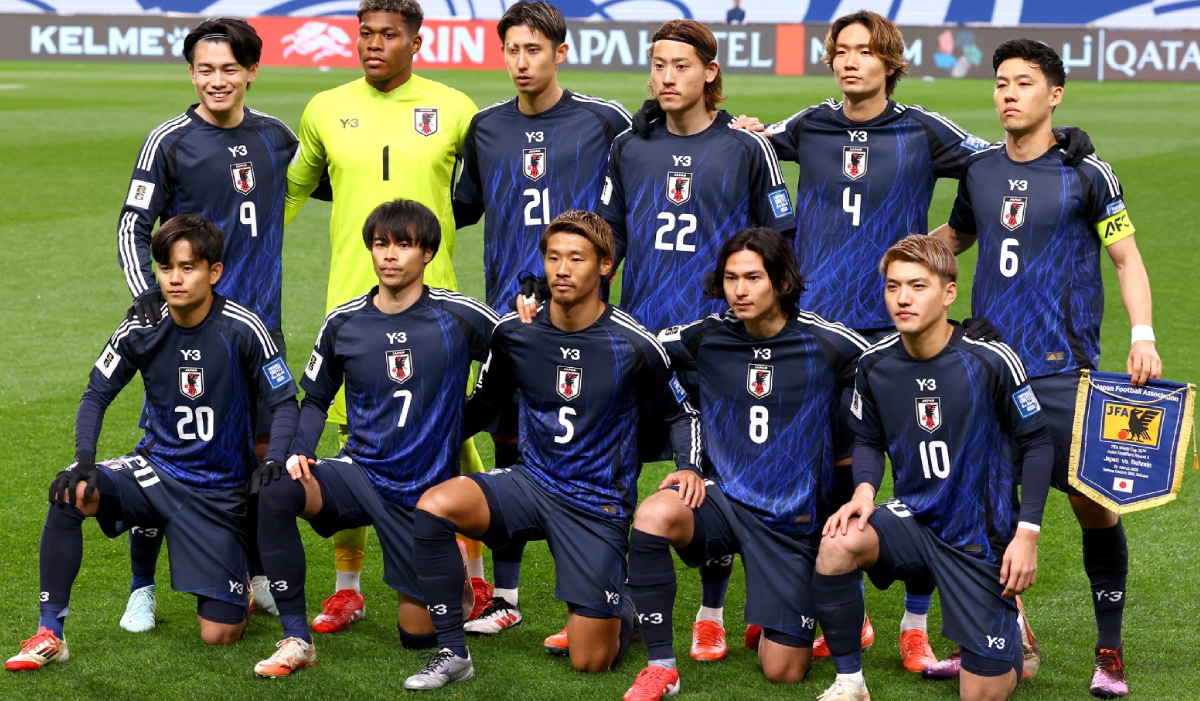
Japan’s national football team, affectionately known as the Samurai Blue, traces its origins to the early 20th century, when football was introduced as part of Western cultural influences during the Meiji era (1868–1912). The team’s inaugural international match occurred in 1921, a 3–2 defeat to the Chinese national team in Shanghai, marking Japan’s first step onto the global football stage. Early struggles were defined by limited resources, minimal infrastructure, and a lack of systematic youth development, as Japan focused primarily on baseball and sumo wrestling. The post-World War II era saw gradual improvements, with the establishment of the Japan Football Association (JFA) in 1921 and the first organized domestic league, the Japan Soccer League (JSL), launched in 1965. These foundational steps laid the groundwork for Japan’s eventual rise in Asian and world football.
The journey from obscurity to prominence was punctuated by three defining moments: the 1998 FIFA World Cup qualification, Japan’s first appearance in a World Cup; the 2002 World Cup co-hosted with South Korea, where they reached the knockout stage; and the 2010 World Cup, where they advanced to the round of 16. These achievements not only redefined Japan’s football identity but also inspired a generation of players and fans, transforming football into a unifying national passion.

Origins and Early Struggles: The Pre-1990s Era
Japan’s football history before the 1990s was characterized by modest participation in international competitions and a near-total absence from major tournaments. The team’s first FIFA World Cup qualification attempt came in 1954, but they failed to advance beyond the Asian qualifying stage. For decades, Japan’s footballing efforts were overshadowed by other sports, and the national team’s performances reflected this lack of investment. The 1950s–1980s were marked by humiliating defeats, including a 13–0 loss to South Korea in 1954 and a 10–0 thrashing by Hong Kong in 1966. These setbacks, however, became catalysts for change.
The 1980s marked a turning point with the introduction of professionalism and structured coaching. The JFA began sending players abroad to gain experience, and the Japan Soccer League (JSL) professionalized in 1970. Despite these steps, Japan’s international performances remained inconsistent until the 1990s, when a combination of youth academies, improved infrastructure, and tactical innovation began to yield results.
Key Milestones: From 1998 to the Present
Japan’s footballing renaissance began with their historic 1998 FIFA World Cup qualification, the first for an Asian team outside the Middle East. This achievement was spearheaded by Hidetoshi Nakata, who later became a global icon playing for clubs like Parma and Roma. The 1998 World Cup itself was a mixed bag—Japan failed to advance past the group stage, but their 1–0 win over Jamaica under manager Philipp Troussier demonstrated their potential.
The 2002 World Cup, co-hosted with South Korea, remains Japan’s most celebrated footballing moment. Under manager Philipp Troussier, the team reached the knockout stage, defeating Russia, Tunisia, and Belgium before losing to Turkey in the round of 16. Stars like Keisuke Honda, Junichi Inamoto, and Shunsuke Nakamura became household names, and the tournament boosted domestic football’s popularity. The 2010 World Cup further solidified Japan’s status, with Keisuke Honda’s hat-trick against Denmark in the group stage and a round of 16 appearance against Paraguay, where they lost 1–0.
Beyond World Cups, Japan’s AFC Asian Cup victories in 2000 and 2004 under Zico and Philippe Troussier cemented their dominance in Asia. The 2011 AFC Asian Cup triumph, where they defeated Australia in the final, was particularly significant, as it marked Japan’s first continental title in over a decade.
Legendary Players and Their Impact on Japan’s Football Identity
Japan’s footballing legacy is defined by players who transcended borders and inspired a nation. Kazuyoshi Miura, nicknamed "The King", became a global icon with his 23-year career, including stints in Europe with Gamba Osaka, Genoa, and Bologna. His longevity and passion made him a symbol of dedication.
Hidetoshi Nakata, the first Japanese player to win a European league title (Parma, 1996), became a pioneer for Asian footballers in Europe. His 1998 World Cup performance and later success in Italy redefined Japan’s image abroad.
Keisuke Honda, with his 103 international goals (Japan’s all-time top scorer), revolutionized Japan’s attacking play. His 2010 World Cup hat-trick remains one of the most memorable moments in Samurai Blue history.
Shunsuke Nakamura, known for his technical brilliance and clutch performances, was instrumental in Japan’s 2002 and 2010 World Cup runs. His 10 goals in the 2002 tournament made him the top scorer.
Comparative Analysis: Japan’s World Cup Performances (1998–2022)
Japan’s World Cup journey reflects growth, resilience, and tactical evolution. Below is a comparative table summarizing their performances from 1998 to 2022, including goals scored, group stage results, and standout players.
| Year | Group Stage Record | Goals Scored / Conceded | Notable Players | ||||||||||||||||||||||||||||||||||||||||||||||||||||||||||||||||||||||||||||||||||
|---|---|---|---|---|---|---|---|---|---|---|---|---|---|---|---|---|---|---|---|---|---|---|---|---|---|---|---|---|---|---|---|---|---|---|---|---|---|---|---|---|---|---|---|---|---|---|---|---|---|---|---|---|---|---|---|---|---|---|---|---|---|---|---|---|---|---|---|---|---|---|---|---|---|---|---|---|---|---|---|---|---|---|---|---|---|
| 1998 (France) | Lost all 3 matches (0W, 0D, 3L) | 2 / 9 | Hidetoshi Nakata, Masayuki Okano, Kazuyoshi Miura | ||||||||||||||||||||||||||||||||||||||||||||||||||||||||||||||||||||||||||||||||||
| 2002 (South Korea/Japan) | Top of Group H (3W, 0D, 0L) | 8 / 4 | Shunsuke Nakamura, Keisuke Honda, Junichi Inamoto | ||||||||||||||||||||||||||||||||||||||||||||||||||||||||||||||||||||||||||||||||||
| 2006 (Germany) | Lost all 3 matches (0W, 0D, 3L) | 0 / 11 | Shinji Ono, Atsushi Yanagisawa, Keisuke Honda | ||||||||||||||||||||||||||||||||||||||||||||||||||||||||||||||||||||||||||||||||||
| 2010 (South Africa) | Top of Group E (2W, 1D, 0L) | 8 / 4 | Keisuke Honda (hat-trick vs. Denmark), Yasuhito Endo, Yuto Nagatomo | ||||||||||||||||||||||||||||||||||||||||||||||||||||||||||||||||||||||||||||||||||
| 2014 (Brazil) | Lost all 3 matches (0W, 0D, 3L) | 1 / 4 | Keisuke Honda, Shinji Kagawa, Yuto Nagatomo | ||||||||||||||||||||||||||||||||||||||||||||||||||||||||||||||||||||||||||||||||||
| 2018 (Russia) | Lost all 3 matches (0W, 0D, 3L) | 2 / 5 | Takashi Inui, Mayu Yamanaka, Genki Haraguchi | ||||||||||||||||||||||||||||||||||||||||||||||||||||||||||||||||||||||||||||||||||
| 2022 (Qatar) | Top of Group F (2W, 1D, 0L) | 8 / 3 | Ritsu Doan, Takumi Minamino
Japan’s Football Infrastructure: Building a Nation of Talent from Grassroots to Global CompetitivenessJapan’s football infrastructure stands as a testament to systematic development, blending tradition with modern innovation to cultivate talent at every level. From the bustling youth leagues of rural towns to the high-stakes professionalism of the J.League, the system reflects a deliberate investment in both facilities and governance. This structure not only nurtures elite players like Keisuke Honda and Hiroki Sakai but also fosters a culture where football transcends sport, becoming a unifying force. The evolution of Japan’s football ecosystem—marked by reforms, technological integration, and grassroots initiatives—highlights its commitment to balancing competitiveness with inclusivity, even amid challenges like demographic decline and regional disparities.The Pyramid of Japanese Football: Youth Development to Professional DominationJapan’s football pyramid begins with youth academies, where children as young as 5 years old enter structured training programs under the Japan Football Association (JFA). The system is divided into regional leagues for age groups U-12 to U-18, with 11 prefectural leagues and 4 national leagues (U-15 and U-18) serving as feeder systems for higher tiers. These leagues emphasize technical skills, tactical understanding, and physical conditioning, often in collaboration with local schools and clubs. The JFA Academy, established in 2014, further centralizes talent identification by hosting elite camps for promising young players, many of whom later progress to J.League academies affiliated with top professional clubs. The transition to professional football occurs through the J.League, Japan’s premier league, which operates on a tiered structure:Governance and Reforms: The Role of JFA and FA in Shaping Japan’s Football FutureThe Japan Football Association (JFA), founded in 1921, serves as the governing body overseeing national teams, competitions, and grassroots football. Its Football Administration Committee and Technical Committee drive policy reforms, including:The J.League Revolution: How Professional Football Transformed Japan’s Sporting LandscapeThe founding of the J.League in 1993 marked a turning point, professionalizing football and elevating it to mainstream popularity. Key developments include:Challenges in Japan’s Football Infrastructure: Aging Populations, Regional Gaps, and Sporting RivalryDespite its successes, Japan’s football infrastructure faces critical hurdles:Comparative Analysis: Japan’s Top J.League ClubsThe following table highlights the trophy-winning records, stadium capacities, and fan engagement metrics of Japan’s most successful clubs as of 2023:
Youth Development Innovations
|
| Era | Dominant Formation | Key Tactical Traits | Signature Players/Influences |
|---|---|---|---|
| 1990s (Defensive Block) | 4-4-2 / 4-1-4-1 |
|
|
| 2000s (Counterattacking) | 4-2-3-1 / 3-4-3 |
|
|
| 2020s (Possession-Based) | 4-3-3 / 3-4-1-2 |
|
|
Defensive Innovations and Goalkeeping Leadership
Japan’s defensive strategies have continually evolved to counter physical opposition. Key innovations include:Foreign Influence and Controversies in Japan’s Tactical Development
Foreign coaches and players have played a pivotal role in shaping Japan’s identity,Global Competitiveness: Japan’s Rise and Challenges in International Football
Japan’s ascent in global football is a testament to resilience, tactical innovation, and relentless preparation, positioning it as Asia’s premier football nation while navigating the complexities of competing with traditional powerhouses. As of 2024, Japan consistently ranks among the top 10 in FIFA’s Men’s World Rankings, often securing the #9–12 spot—a remarkable achievement for an Asian team. This standing underscores Japan’s status as the only Asian nation to qualify for every FIFA World Cup since 1998, reflecting its dominance in the AFC and ability to punch above its weight in international tournaments. However, the gap between Japan and Europe’s elite (Germany, Spain, Brazil) or South America’s giants remains stark, exposing vulnerabilities in physicality, tactical flexibility, and squad depth. The team’s strategic focus on qualification campaigns, regional alliances, and psychological conditioning has become a blueprint for underdogs, yet challenges persist in sustaining consistency against the world’s best.Japan’s FIFA Rankings and Regional Dominance in Asia
Japan’s FIFA ranking trajectory illustrates its consistent improvement and regional supremacy. At its peak, Japan reached #24 in 2010 (post-World Cup quarterfinal run) and #28 in 2023, maintaining stability within the top 30 since 2006. This ranking places Japan ahead of all other AFC nations, including Saudi Arabia (#49), Australia (#45), and South Korea (#32), reinforcing its role as the continent’s benchmark. Comparatively, Japan’s ranking is ~20 positions higher than the AFC’s average, highlighting its elite status. The gap with UEFA’s lower-tier teams (e.g., Portugal at #10, Belgium at #12) persists, but Japan’s ability to secure draws or victories against mid-tier European sides (e.g., 1-1 vs. Germany in 2022, 2-0 vs. Spain in 2023) demonstrates its competitive edge in Asia. Japan’s AFC Asian Cup dominance further solidifies its regional authority. Since 1992, Japan has won the tournament four times (2000, 2004, 2011, 2023), with only South Korea and Australia posing serious challenges. The team’s consistent semifinal or final appearances (12/18 tournaments) reflect its tournament pedigree, contrasting with emerging nations like Iran or Qatar, which struggle to replicate Japan’s consistency.Head-to-Head Records: Victories Over Giants and Struggles Against Rivals
Japan’s international record reveals a mix of historic upsets and humbling defeats, showcasing its ability to exploit tactical advantages while grappling with physical disparities. Against Top-Tier Nations:Qualification Strategies: AFC Asian Cup Dominance and World Cup Campaigns
Japan’s qualification approach combines tactical pragmatism, home advantage, and psychological warfare. For the AFC Asian Cup, Japan leverages:Challenges in Competing with Europe and South America
Despite its achievements, Japan faces structural and tactical challenges when facing Europe’s elite: Physicality and Athleticism:Japan’s AFC Asian Cup Performance: A Decade of Dominance
Japan’s AFC Asian Cup record (1992–2023) demonstrates its evolution from underdog to continental giant. Below is a responsive HTML table summarizing key metrics:| Year | Stage Reached | Goals Scored | Key Players | ||||||||||||||||||
|---|---|---|---|---|---|---|---|---|---|---|---|---|---|---|---|---|---|---|---|---|---|
| 1992 | Group Stage | 3 | Hori, Takagi | ||||||||||||||||||
| 1996 | Semifinals | 8 | Nakayama, Akita | ||||||||||||||||||
| 2000 | Champions | 12 | Nakata, Inamoto, Morioka | ||||||||||||||||||
| 2004 | Champions | 16 | Oguro, Endo, Tamada | ||||||||||||||||||
| 2007 | Fan Culture and Commercial Impact of Japan’s National Team
Japan’s national football team, the Samurai Blue, transcends sport, embedding itself deeply into the cultural and commercial fabric of the nation. The fervor surrounding the team manifests through unique traditions, merchandise-driven economics, and technologically enhanced fan engagement, creating a global phenomenon that blends heritage with modernity. From the iconic bento-themed merchandise to stadium rituals involving maneki-neko (lucky cat) charms, Japan’s football fan culture is a vibrant tapestry of symbolism, economic power, and emotional investment. The team’s commercial success, fueled by historic achievements like the 2002 World Cup, has transformed football into a lucrative industry, while its global fanbase continues to expand through digital innovation and strategic partnerships.
Cultural Symbols in Japan’s Football Fan IdentityThe Samurai Blue’s fan culture is rich with symbols that reflect Japan’s national identity and footballing spirit. Bento boxes, traditionally packed lunches, appear in merchandise as themed scarves, keychains, and even stadium giveaways, symbolizing the team’s role as a unifying force during matches. Fans often carry bento-decorated items as good luck charms or share them post-match to celebrate victories. Similarly, maneki-neko, the beckoning cat figurines believed to bring fortune, are ubiquitous in stadiums, worn as pins or displayed in fan sections. Other symbols include shishi-odoshi (lion-dog water fountains), which appear in stadium decorations, and cherry blossom motifs, representing resilience and fleeting glory—mirroring the team’s journey. The integration of these symbols extends beyond aesthetics. During major tournaments, the Japan Football Association (JFA) collaborates with local artisans to produce limited-edition merchandise, such as bento-inspired jerseys or maneki-neko-embellished scarves, which sell out within hours. Stadium rituals, such as the pre-match "Samurai Blue" chant—a rousing call-and-response led by fans—often incorporate these symbols, with maneki-neko figurines waved in unison before key plays. The JFA’s official stadiums, like the International Stadium Yokohama, feature permanent installations of these cultural icons, reinforcing their association with the team’s identity.Merchandise Sales and Stadium Attendance RecordsJapan’s national team merchandise market is a $100 million+ annual industry, with sales peaking during World Cup qualification cycles and major tournaments. The 2018 FIFA World Cup saw Japan’s official merchandise sales exceed ¥3.5 billion ($30 million), driven by jerseys, replica kits, and themed accessories. The 2022 FIFA World Cup qualification campaign generated ¥5 billion ($38 million) in merchandise revenue, with the home jersey (designed by Nike) becoming the best-selling item. Stadium attendance records further underscore the team’s popularity: the 2019 AFC Asian Cup in the UAE drew average attendances of 68,000 per match, while the 2023 East Asian Cup in Japan saw 90,000+ fans pack the Saitama Stadium for the final. Global fanbase growth is evident through social media engagement, with the JFA’s official accounts amassing over 5 million followers across platforms. Overseas fan clubs, particularly in Brazil, the U.S., and Southeast Asia, have expanded, with cities like São Paulo and Los Angeles hosting annual Samurai Blue viewing parties. The JFA’s international merchandise store reports that 30% of sales now come from outside Japan, with replica jerseys being the top export.Commercial Impact of the 2002 World Cup and SponsorshipsThe 2002 FIFA World Cup, co-hosted by Japan and South Korea, marked a turning point for the team’s commercial viability. The tournament generated ¥1.5 trillion ($12 billion) in economic impact, with football-related tourism contributing ¥300 billion ($2.3 billion). Sponsorships surged, with Toyota (official partner since 1998) investing ¥5 billion ($38 million) in the campaign, while Asics and Kirin Beer secured long-term deals. Broadcasting rights for the tournament fetched ¥200 billion ($1.5 billion), a record for Japanese sports media. Post-2002, the JFA secured ¥10 billion ($76 million) in sponsorships annually, with deals expanding to Panasonic, ANA Airlines, and Rakuten. Licensing agreements for video games (e.g., FIFA/EA Sports) and anime collaborations (e.g., One Piece jerseys) further diversified revenue streams. The 2019 AFC Asian Cup, hosted by the UAE but heavily promoted in Japan, brought in ¥8 billion ($60 million) through domestic broadcasting and merchandise, proving the team’s enduring commercial appeal.Fan Experiences at National Team MatchesAttending a Samurai Blue match is a multisensory experience, blending tradition with spectacle. Pre-match ceremonies often include Taiko drum performances, samurai reenactments, and the raising of the team flag to the sound of "Ganbarou Nippon" (Fight on, Japan). Fans participate in organized chants, such as:Top Japan National Team Fan Clubs by Size and TraditionJapan’s fan culture is organized through ultras groups, corporate supporters, and regional clubs, each with distinct traditions. Below is a comparative table of the top five fan clubs:
|
Leave a Comment
Comments are moderated before appearing. The data you submit is processed according to the Privacy Policy of Vetlife Archive.