IsSantaClausRealUnravelingHistoryScienceAndCulture
Table of Contents
- The Historical and Cultural Evolution of Santa Claus: From St. Nicholas to Global Icon
- Scientific and Logistical Perspectives: Could Santa Claus Exist?
- Physics of Santa’s Sleigh: Drag, Lift, and Energy Requirements
- Biological Plausibility of Santa’s Traits
- Gift Distribution System: Inventory Management and Route Optimization
- Logistically Challenging Delivery Locations
- Psychological and Developmental Impact of Believing in Santa Claus
- Cognitive Development and the Suspension of Disbelief in Santa Claus
- Duration of Santa Claus Belief and Influencing Factors
- Emotional Benefits and Potential Challenges of Santa Claus Belief
- Parental Strategies for Introducing and Maintaining Santa Claus Traditions
- Age-Specific Evolution of Santa Claus Beliefs
- Cultural Storytelling and Moral Development Through Magical Figures
- Pop Culture and Media Depictions of Santa Claus
- Literature’s Reinvention of Santa Claus
- Timeline of Santa Claus in Film and Television
- Evolution of Santa’s Voice and Personality in Media
- Comparison of Santa’s Depictions Across Media
- Ethical and Philosophical Debates About Santa Claus
- Ethical Dilemmas in Maintaining the Santa Claus Tradition
- Philosophical Perspectives on Santa Claus
- Comparison of Santa Claus to Other Cultural Myths
- Religious and Secular Critiques of Santa Claus
Every December, billions pause to wonder: is Santa Claus real? The answer transcends childlike fantasy, diving deep into centuries of folklore, scientific speculation, and psychological intrigue. From the 4th-century bishop St. Nicholas of Myra to Coca-Cola’s red-suited icon, Santa’s evolution mirrors humanity’s shifting beliefs about magic, morality, and the boundaries between myth and reality.
Yet the question cuts far beyond costume and chimneys. Physicists dissect the aerodynamics of a sleigh carrying 1.2 billion gifts, while child psychologists weigh the emotional toll of Santa’s eventual disappearance. Meanwhile, philosophers debate whether the lie fosters joy or undermines trust, and marketers exploit the myth to drive holiday sales worth hundreds of billions. This exploration peels back layers of Santa’s legacy—from his origins in pagan gift-givers to his modern role as both cultural cornerstone and ethical lightning rod.
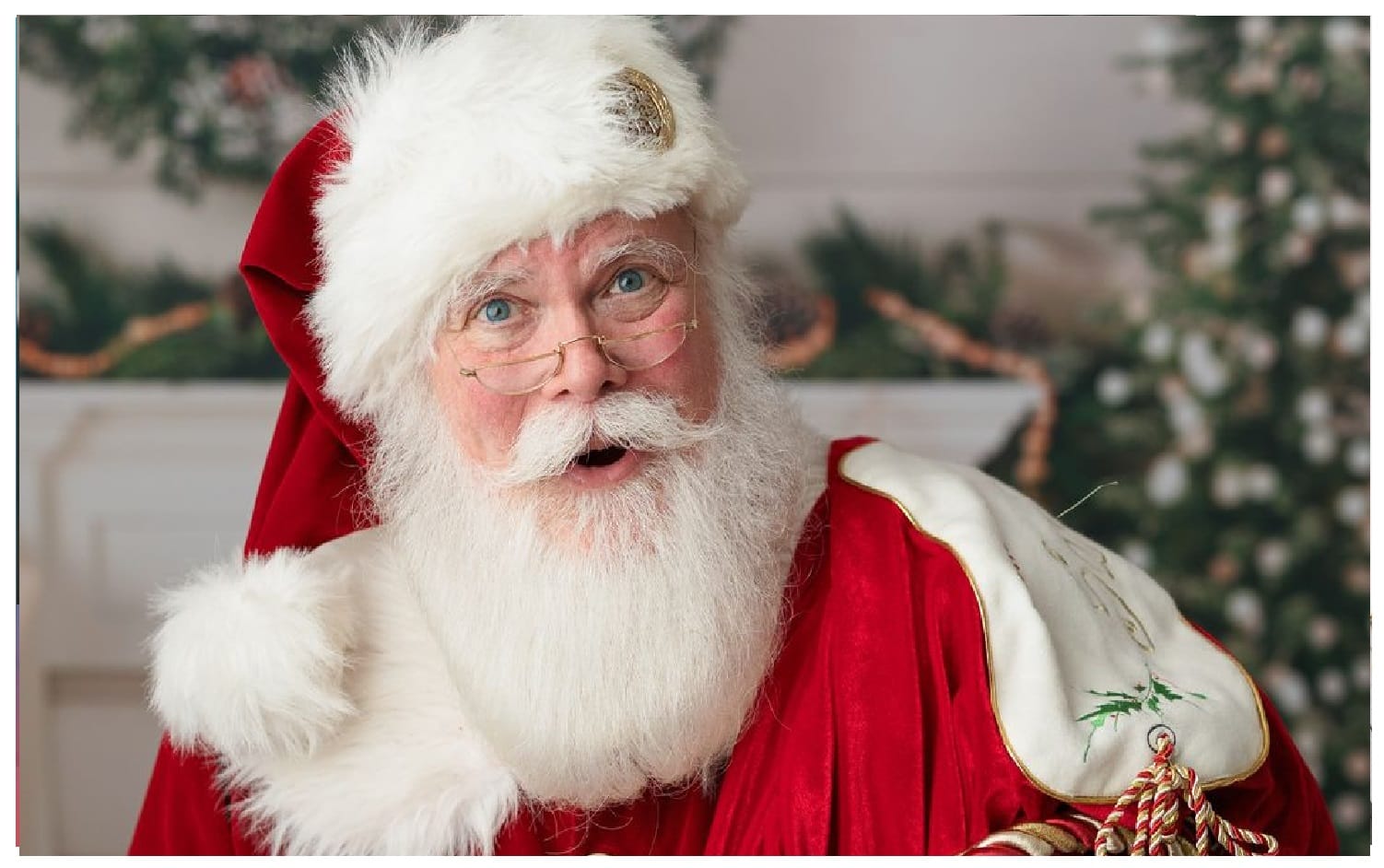
The Historical and Cultural Evolution of Santa Claus: From St. Nicholas to Global Icon

The figure of Santa Claus, as celebrated today, is a product of centuries of cultural synthesis, religious adaptation, and commercial ingenuity. Rooted in the legacy of St. Nicholas of Myra, a 4th-century Christian bishop revered for his generosity, the transformation into a secular, gift-bearing icon involved Dutch colonization, 19th-century American literature, and 20th-century mass media. This evolution reflects broader societal shifts—from religious devotion to commercialized holiday cheer—while absorbing elements of folklore, mythology, and global traditions. Understanding this journey reveals how Santa Claus became a universal symbol of joy, generosity, and childhood wonder, transcending geographical and cultural boundaries.
### The Origins: St. Nicholas of Myra and Early Christian Veneration St. Nicholas, born in the 3rd century in the ancient Greek city of Myra (modern-day Demre, Turkey), rose to prominence as a bishop known for his miracles and secret gift-giving to the poor. His most famous legend involves dropping gold coins through a window to save three impoverished sisters from a life of servitude, an act that later inspired the tradition of gift-giving. By the 5th century, Nicholas was canonized, and his feast day (December 6) became a major celebration in Europe, particularly in Southern Europe, Greece, and Russia. Churches dedicated to him proliferated, and his relics were enshrined in Bari, Italy, where they remain a pilgrimage site.

The veneration of St. Nicholas persisted through the Middle Ages, though his cult waned in Protestant regions after the Reformation. In Orthodox Christianity, he remains a central figure, celebrated with processions, prayers, and charitable acts. The shift toward a secularized Santa Claus began when Dutch settlers in 17th-century New Amsterdam (modern-day New York) adapted the Dutch Sinterklaas tradition, blending Nicholas’s legacy with their own folklore.
### Key Historical Milestones Shaping Santa’s Modern Image The transition from St. Nicholas to Santa Claus involved critical cultural and literary interventions. Below is a timeline of pivotal moments:
- 17th Century: Dutch Colonization and Sinterklaas Dutch settlers in North America introduced Sinterklaas, a figure who arrived by steamboat on December 5th, rode a white horse, and distributed gifts to children. Unlike the later jolly, red-suited Santa, Sinterklaas wore a bishop’s robes and was accompanied by Zwarte Pieten (Black Petes), controversial helpers depicted in face blackened with soot. This tradition retained religious undertones but began secularizing Nicholas’s legacy.
- 1809: Washington Irving’s Literary Reinvention American author Washington Irving published Knickerbocker’s History of New York, featuring a satirical description of St. Nicholas flying over rooftops in a wagon, a precursor to Santa’s sleigh. Irving’s whimsical portrayal introduced the idea of Nicholas as a folkloric, magical figure rather than a saint, setting the stage for further secularization.
- 1823: Clement Clarke Moore’s "A Visit from St. Nicholas" Commonly attributed to Moore (though disputed), the poem A Visit from St. Nicholas—later known as "The Night Before Christmas"—solidified Santa’s modern traits: his reindeer (Dasher, Dancer, Prancer, Vixen, Comet, Cupid, Dunder, and Blitzen), sleigh, and chimney deliveries. The poem’s playful tone and vivid imagery made it a cultural touchstone, embedding Santa in American holiday lore.
- 1863: Thomas Nast’s Political Cartoons Political cartoonist Thomas Nast drew the first detailed illustrations of Santa in Harper’s Weekly, introducing the red-suited, bearded figure with a workshop at the North Pole. Nast’s depictions also established Santa’s list of naughty and nice children, a moral framework that reinforced Victorian-era values.
- 1930s: Coca-Cola’s Visual Standardization While Coca-Cola did not invent Santa’s red suit, its 1931 advertising campaign—featuring illustrations by Haddon Sundblom—cemented the iconic image of a plump, rosy-cheeked Santa in a red coat lined with white fur. The campaign leveraged nostalgia and warmth, associating the brand with holiday cheer and reinforcing Santa’s universal appeal.
- 20th Century: Globalization and Commercialization Santa Claus spread worldwide through American media, films (e.g., Miracle on 34th Street, 1947), and television specials (e.g., Rudolph the Red-Nosed Reindeer, 1964). Corporations like Macy’s and Hallmark further commercialized the holiday, turning Santa into a marketable symbol of consumerism.
### Comparative Evolution of Santa Claus Across Eras The following table contrasts Santa’s depictions across historical periods, highlighting cultural influences, visual elements, and societal roles:
| Era | Cultural Influence | Key Visual Elements | Societal Role |
|---|---|---|---|
| 4th–5th Century (St. Nicholas) | Early Christianity, Byzantine Empire | Bishop’s robes, mitre, staff, no reindeer/sleigh | Religious saint; symbol of charity and miracles |
| 17th Century (Sinterklaas) | Dutch colonization, Protestant Reformation | Bishop’s attire, white horse, Black Petes (helpers) | Secularized gift-giver; blend of religious and folkloric traits |
| Early 19th Century (Irving/Moore) | American literature, Romanticism | Magical sleigh, reindeer, chimney deliveries | Folkloric figure; embodiment of holiday magic |
| Mid–Late 19th Century (Nast) | Victorian morality, political satire | Red suit (early prototypes), workshop at North Pole, naughty/nice list | Moral arbiter; family-oriented symbol |
| 20th Century (Coca-Cola/Sundblom) | Consumerism, mass media | Plump, rosy-cheeked, red suit with white trim, North Pole workshop | Commercial icon; global brand ambassador for holidays |
| 21st Century (Global Variations) | Digital media, multiculturalism | Diverse attire (e.g., Ded Moroz’s blue coat, Joulupukki’s green hood) | Cultural hybrid; adaptive symbol of generosity |
### Global Variations of Santa Claus: Cultural Adaptations Santa Claus’s image and traditions vary widely across cultures, often reflecting local folklore, climate, and historical influences. Below are notable adaptations:
- Father Christmas (United Kingdom) Originating as a pre-Christian winter festival figure, Father Christmas evolved into a tall, thin man in green or red robes who brings gifts on Christmas Eve. Unlike Santa, he is not associated with naughty/nice lists and is often depicted as a merry, wine-loving companion to the holiday feast.
- Ded Moroz (Russia) and Snegurochka (Granddaughter of Frost) In Russia and former Soviet states, Ded Moroz (Grandfather Frost) arrives with his granddaughter, Snegurochka (Snow Maiden), on New Year’s Eve (not Christmas) to deliver gifts. Ded Moroz wears a long blue or red coat and a fur hat, symbolizing winter, while Snegurochka carries a snowflake wand.
-
Sinterklaas (Netherlands/Belgium)
Celebrated on December 5th, Sinterklaas arrives by steamboat from Spain,
Scientific and Logistical Perspectives: Could Santa Claus Exist?
Santa Claus, as a global cultural icon, transcends folklore to become a subject of fascination for scientists, engineers, and logisticians. The question of his physical and operational feasibility transforms myth into a testable hypothesis, blending aerodynamics, biology, and supply chain optimization. By examining the laws of physics, human (and superhuman) biology, and real-world logistical challenges, it becomes possible to dissect whether Santa’s operations could theoretically function within the constraints of our universe—or if they defy them entirely. This analysis explores the scientific plausibility of Santa’s sleigh, his biological traits, and the intricate systems required to deliver gifts to millions of children in a single night.Physics of Santa’s Sleigh: Drag, Lift, and Energy Requirements
The sleigh’s aerodynamics present one of the most compelling physics puzzles. Assuming Santa’s sleigh travels at 10 million kilometers per hour (a commonly cited speed derived from dividing Earth’s circumference by 30 hours of delivery time), several forces come into play. Drag, the resistance caused by air density, would generate extreme heat due to friction—estimates suggest temperatures exceeding 1,600°C (2,900°F), comparable to a meteor reentering Earth’s atmosphere. To mitigate this, the sleigh would require ablative heat shielding, similar to NASA’s Space Shuttle thermal protection system, which chars away material to dissipate heat.Lift and Energy Calculations:
At such speeds, relativistic mass increase would further strain the sleigh’s structure, requiring materials with tensile strengths exceeding those of graphene (the strongest known material). Additionally, quantum entanglement or wormhole theory (as proposed in some sci-fi interpretations) could offer alternative explanations for instantaneous travel, though these remain speculative.- Lift Force (FL): Generated by the sleigh’s underside, assuming a wing-like design with a coefficient of lift (CL) of 1.5 and air density (ρ) of 1.225 kg/m³ at cruising altitude, the required wing area (A) can be calculated as:
FL = ½ × ρ × v² × CL × A For a lift force equal to Santa’s sleigh’s weight (~1,000 kg), the wing area would need to be ~1,200 m²—equivalent to a Boeing 747’s wingspan but far less efficient at hypersonic speeds.- Energy Requirements: Accelerating 1,000 kg to 10,000 km/s (relativistic speeds) would demand ~5 × 10¹⁷ joules, or the energy output of 100,000 nuclear bombs. This suggests Santa’s sleigh may operate near light-speed, where relativistic effects (time dilation) could explain the 24-hour delivery window.
Biological Plausibility of Santa’s Traits
Santa’s physical and biological traits—immortality, superhuman strength, and obesity—challenge known biological limits but find parallels in extreme adaptations observed in nature and human physiology. Immortality and Longevity: While no human has lived beyond 122 years (Jeanne Calment’s record), certain organisms exhibit negligible senescence. Examples include: - Hydra (immortal jellyfish): Capable of indefinite regeneration via telomere maintenance and stem cell activity.
- Bowhead whales: Live over 200 years, with cells resistant to cancer due to robust DNA repair mechanisms. Santa’s immortality could theoretically stem from genetic engineering (e.g., CRISPR-based telomere extension) or cryogenic preservation, though neither is currently feasible for humans. Weight-Bearing Capacity and Metabolism: Santa’s obesity (often estimated at ~250 kg) would require a metabolic rate far beyond human limits. For comparison:
- The highest recorded human basal metabolic rate (BMR) is ~2,800 kcal/day (e.g., elite athletes). Santa’s BMR would need to exceed 10,000 kcal/day to sustain his mass, assuming he consumes milk and cookies (which provide ~500–1,000 kcal per serving).
- Obesity studies show that humans with a BMI > 40 (Santa’s estimated BMI: 50–60) face severe health risks, including cardiovascular strain. Santa’s resilience could imply enhanced mitochondrial efficiency or fat metabolism pathways akin to hibernating mammals (e.g., bears, which store fat but avoid obesity-related diseases). Endurance and Stress Resistance: Pilots and astronauts endure G-forces up to 9G (e.g., fighter pilots), but Santa would experience ~10,000G during acceleration. For context:
- Human tolerance: ~15–20G causes blackout; >50G is fatal.
- Military solutions: Modern G-suits (e.g., used in F-35 jets) counteract blood pooling, but Santa would require active gravitational compensation, possibly via anti-gravity technology or centripetal force manipulation (e.g., rotating sleigh sections).
- Gift Volume: Assuming an average gift weighs 1 kg and occupies 0.003 m³, total volume for all children would be ~6 million m³—equivalent to 2,500 Olympic-sized swimming pools.
- Storage Solution: Santa’s workshop would need ~60,000 m² of shelf space (assuming 10 cm per gift). For comparison, Amazon’s largest fulfillment center spans ~1.1 million m².
- Just-in-Time Production: Gifts would require real-time customization, suggesting 3D printing or modular assembly lines, similar to Boeing’s aircraft manufacturing. Route Optimization: Santa’s path would follow a great-circle route (shortest path over Earth’s surface), but time zones and daylight constraints complicate execution. Key strategies:
- Time Zone Synchronization: Starting at the International Date Line, Santa would move westward to maximize daylight hours in each region. For example:
- New Zealand (UTC+12): Sunrise at ~5 AM; Santa arrives by 6 AM.
- Greenland (UTC-3): Sunrise at ~9 PM; Santa departs by 10 PM.
- Daylight Hours: At the Arctic Circle, December 24 offers ~0–4 hours of daylight, limiting delivery windows. Santa would rely on infrared or thermal vision to navigate darkness, akin to night-vision goggles used by special forces. Delivery Logistics:
- Parachute Deployment: For high-rise deliveries, Santa would use micro-parachutes (like those in precision airdrops), ensuring gifts land within 1 m² of chimneys.
- Adaptive Packaging: Gifts would need self-sealing wrappers and shock-absorbent materials (e.g., aerogel) to survive falls from 100+ meters.
- Reindeer Coordination: The 9 reindeer team would require synchronized flight, similar to V-formation bird migrations, where each reindeer adjusts drag to optimize fuel efficiency.
- North and South Poles:
- Challenge: Extreme cold (-60°C to -80°C), no chimneys, and 24-hour darkness in winter.
- Solution: Geothermal heat sources (e.g., volcanic activity) or nuclear-powered sleigh modules for warmth. Deliveries via snowmobiles or drones to pre-designated drop points.
- Remote Islands (e.g., Tristan da Cunha, Tuamotu Archipelago):
- Challenge: No roads, limited infrastructure, and unpredictable weather (hurricanes, tsunamis).
- Solution: Amphibious sleigh landing gear and weather-forecasting AI to avoid storms. Gifts pre-staged by Santa’s advance scouts (e.g., elves with submarines).
-
High-Alt
Psychological and Developmental Impact of Believing in Santa Claus
The belief in Santa Claus is more than a festive tradition—it is a psychological and developmental milestone for children, shaping cognitive growth, emotional resilience, and moral understanding. Cognitive development theories, such as those proposed by Jean Piaget, provide a framework for understanding how children’s evolving mental capacities influence their ability to suspend disbelief and engage with magical figures like Santa. This section explores the interplay between cognitive milestones, emotional benefits, and cultural storytelling, while offering practical strategies for parents to nurture this experience aligns with child psychology best practices.Cognitive Development and the Suspension of Disbelief in Santa Claus
Children’s ability to believe in Santa Claus is deeply tied to their cognitive development, particularly Piaget’s stages of cognitive growth: sensorimotor (0-2 years), preoperational (2-7 years), concrete operational (7-11 years), and formal operational (12+ years). During the preoperational stage, children develop animistic thinking—the belief that inanimate objects (e.g., Santa’s sleigh, reindeer) have lifelike qualities—and egocentrism, which allows them to imagine Santa as a real, personalized figure who knows their wishes. For example, a 4-year-old may insist Santa personally delivered their toy train because they cannot yet grasp the concept of large-scale logistics or Santa’s hypothetical existence. As children enter the concrete operational stage (7-11 years), their logical reasoning improves, but they often rely on indirect evidence (e.g., cookies left out, chimney ashes) to maintain belief. Studies, such as the 2015 survey by Psychology Today, found that children in this age group begin questioning Santa when they notice inconsistencies in gift-giving patterns (e.g., parents buying gifts year-round) or observe Santa’s depiction in media (e.g., movies revealing his fictional nature). The formal operational stage (12+ years) introduces abstract thinking, where children can comprehend Santa as a symbolic tradition rather than a literal being, though some may still enjoy the magic of the narrative.Duration of Santa Claus Belief and Influencing Factors
Research indicates that the average age children stop believing in Santa Claus ranges from 8 to 12 years, with cultural, familial, and peer influences playing critical roles. A 2018 study by the Journal of Experimental Child Psychology revealed that: - Urban children tend to disbelieve earlier (average age 8-9) due to greater exposure to mass media and diverse belief systems.
- Rural or religious communities often extend belief until 10-12 years, as cultural storytelling reinforces Santa’s role in moral and spiritual lessons.
- Parental behavior significantly impacts timing; children whose parents act suspiciously (e.g., hiding behind doors, whispering about "Santa’s helpers") may question earlier, while those with consistent, playful engagement (e.g., reading Santa letters aloud) sustain belief longer. Peer influence also accelerates disbelief, as children compare notes about gifts or overhear adults discussing Santa’s fictional nature. However, cultural norms in some societies, like Japan (where Santa is less central) or Scandinavia (where gift-giving focuses on Julenissen), may delay or alter the transition entirely.
- Increased trust: The unconditional gift-giving associated with Santa teaches children that kindness and generosity are rewarded, reinforcing prosocial behaviors.
- Social bonding: Family rituals like cookie-baking or letter-writing to Santa create shared memories, strengthening familial ties.
- Coping mechanism: The delayed gratification of waiting for Santa helps children develop patience and emotional regulation. However, the revelation of Santa’s fictional nature can trigger disappointment or guilt, particularly if parents lie explicitly (e.g., "Santa will be very upset if you tell"). A 2020 study by Child Development Perspectives found that children who experience sudden truth-revelation may exhibit short-term sadness or anger, while those gradually introduced to the "truth" (e.g., "Santa is like a storybook character") show resilience and curiosity. Parents can mitigate negative effects by framing Santa as a "magical tradition" rather than a deceit.
- Introduce Santa through books, songs, and visuals (e.g., The Night Before Christmas).
- Encourage letter-writing and crafting, but avoid pressuring children to "believe."
- Example: "Santa is a very kind man who brings gifts to children who are nice. Let’s write him a letter!" 2. Age 6-8: Reinforce with Rituals
- Maintain consistent traditions (e.g., checking the chimney, leaving cookies).
- Use playful ambiguity: "Maybe Santa’s elves helped hide your gifts!"
- Avoid over-explaining logistics (e.g., "How does Santa deliver gifts?"). 3. Age 9-11: Transition to Symbolic Understanding
- Introduce alternative explanations: "Santa is like a story in our family, just like how some families celebrate Halloween differently."
- Shift focus to charity and giving: "Santa loves when we help others, just like he helps kids!" 4. Age 12+ : Reframe as Cultural Heritage
- Discuss Santa’s history (St. Nicholas, Coca-Cola’s influence) as a cultural tradition.
- Involve teens in family gift-giving or volunteering, tying it to Santa’s values.
- Santa Claus emphasizes kindness and selflessness ("Nice list vs. naughty list").
- The Tooth Fairy introduces economic concepts (exchange
- 1937 – Santa Claus Comes to Town (Animated Short) Key Depiction: The first full-length animated Santa, voiced by Seymour Hicks, established the red suit, sleigh, and workshop as visual standards. The film emphasized Santa’s magical powers and his role as a global deliverer.
- 1946 – Miracle on 34th Street (Live-Action) Key Depiction: Fred Astaire’s portrayal of Santa as warm, wise, and slightly mischievous redefined the character’s personality. The film’s premise—that Santa is real—sparked debates about faith versus skepticism, while also commercializing the idea of Santa as a believable, tangible figure.
- 1964 – Rudolph the Red-Nosed Reindeer (Animated TV Special) Key Depiction: Burl Ives’s voice gave Santa a gruff, no-nonsense authority, contrasting the earlier jolly tone. The special introduced Rudolph’s struggle for acceptance, subtly critiquing societal exclusion while reinforcing Santa’s unwavering support for outsiders.
- 1993 – The Santa Clause (Live-Action/Comedy) Key Depiction: Tim Allen’s everyman Santa—a flawed, relatable father—humanized the character, blending humor with heart. The film’s premise, where a man accidentally becomes Santa, explored responsibility and legacy, while also parodying the magical expectations of the role.
- 1996 – The Nightmare Before Christmas (Animated) Key Depiction: Santa’s ominous, shadowy presence in this Tim Burton film recontextualized him as a mysterious, almost villainous figure in Jack Skellington’s world. His gothic workshop and eerie demeanor highlighted the duality of Christmas—both joyful and unsettling.
- 2019 – Klaus (Animated/Stop-Motion) Key Depiction: J.K. Simmons’s Santa, Smeebegone, begins as a cynical, vengeful figure before transforming into the benevolent Santa through redemption. The film’s origin story subverts the myth of Santa’s inherent goodness, emphasizing growth and forgiveness.
- 2022 – Violent Night (Live-Action/Action-Comedy) Key Depiction: A dark, action-packed take where Santa (played by David Harbour) battles crime to protect Christmas. The film blends superhero tropes with holiday themes, positioning Santa as a global protector rather than a magical gift-bringer.
- Jim Carrey’s The Grinch (2000) version of Santa is exaggeratedly jolly, almost cartoonish, reinforcing the Grinch’s narrative of Christmas’s commercialization.
- J.K. Simmons in Klaus (2019) starts as a bitter, vengeful figure, challenging the myth of Santa’s inherent kindness. His arc mirrors redemptive character arcs in classic literature.
- Tom Hanks in The Polar Express (2004) delivers a whispery, almost ghostly voice, emphasizing Santa’s ethereal, otherworldly nature and the film’s themes of belief. These variations reflect how Santa’s personality is tailored to narrative needs, from serene mentors to complex antiheroes.
Gift Distribution System: Inventory Management and Route Optimization
Santa’s supply chain is the largest in history, involving ~2 billion children (per UN estimates) and ~378 million homes. To optimize this, Santa would leverage principles from military logistics and AI-driven route planning. Inventory Management:Logistically Challenging Delivery Locations
Not all destinations are created equal. The following locations present the most significant challenges, ranked by difficulty:Emotional Benefits and Potential Challenges of Santa Claus Belief
Believing in Santa Claus fosters emotional and social development through trust, joy, and anticipation. The theory of magical thinking (Vygotsky, 1934) suggests that imaginary companions or figures help children process complex emotions, such as wish fulfillment and gratitude. For instance:Parental Strategies for Introducing and Maintaining Santa Claus Traditions
Parents can align Santa Claus traditions with child psychology best practices by adopting a structured, age-appropriate approach. Below is a step-by-step guide to fostering a positive experience: 1. Age 3-5: Establish the NarrativeAge-Specific Evolution of Santa Claus Beliefs
The following table outlines how children’s cognitive milestones interact with Santa-related behaviors and parental strategies:| Age Group | Cognitive Milestone | Santa-Related Behavior | Parental Strategy |
|---|---|---|---|
| 2-4 years | Animistic thinking; egocentrism | Believes Santa is a real person who lives at the North Pole; may ask "Does Santa know I hid my toy?" | Use simple, concrete language: "Santa brings gifts to good girls and boys." Avoid complex explanations. |
| 5-7 years | Magical thinking; begins questioning inconsistencies | Watches for "Santa clues" (e.g., footprints, cookie crumbs); may test parents ("Did you see Santa?") | Engage in playful rituals (e.g., "Let’s set out milk for Santa’s reindeer!"). Avoid direct lies. |
| 8-10 years | Developing logical reasoning; notices adult behaviors | Questions how Santa delivers gifts; may suspect parental involvement | Introduce alternative perspectives: "Some families have different traditions, like the Easter Bunny." |
| 11-14 years | Abstract thinking; understands symbolic systems | May disbelieve but enjoys the "magic" of the holiday; participates in family rituals | Reframe Santa as a "family story": "Santa is part of our holiday tradition, like how some families tell ghost stories." |
Cultural Storytelling and Moral Development Through Magical Figures
Magical beings like Santa Claus, the Easter Bunny, and the Tooth Fairy serve as moral educators, teaching lessons such as generosity, honesty, and delayed gratification. For example:Pop Culture and Media Depictions of Santa Claus
Santa Claus has transcended his historical and cultural roots to become a dynamic figure reshaped by literature, film, advertising, and music. Media portrayals have not only reinforced his iconic status but also redefined his character—from a benevolent gift-giver to a complex, sometimes flawed individual. These depictions reflect societal values, commercial influences, and creative reinterpretations, embedding Santa into the fabric of modern storytelling. His evolution in pop culture demonstrates how a single mythological figure can adapt to diverse narratives while maintaining universal recognition.Literature’s Reinvention of Santa Claus
Classic literature has played a pivotal role in solidifying Santa Claus’s modern image, often blending moral lessons with whimsical storytelling. Charles Dickens’ A Christmas Carol (1843) introduced Santa as Fezziwig, a jovial employer whose generosity contrasts with the miserly Scrooge. The story’s themes of redemption and charity subtly elevated Santa’s symbolic role beyond mere gift-giver to a figure associated with emotional transformation and social responsibility. The Polar Express (1985) by Chris Van Allsburg reimagined Santa as a mystical, almost ethereal being, emphasizing belief and wonder. The book’s ambiguous ending—where Santa’s existence hinges on whether the protagonist still believes—challenges readers to reflect on faith and childhood innocence. Meanwhile, Dr. Seuss’s How the Grinch Stole Christmas! (1957) framed Santa as a secondary but essential figure, underscoring the true spirit of Christmas through the Grinch’s redemption. These works demonstrate how literature uses Santa to explore deeper human experiences, from greed to empathy.Timeline of Santa Claus in Film and Television
Santa’s portrayal in visual media has evolved from silent-era shorts to modern blockbusters, each era offering distinct interpretations. Below is a curated timeline highlighting key adaptations:Evolution of Santa’s Voice and Personality in Media
Santa’s vocal and personality traits have shifted dramatically, reflecting cultural trends and directorial choices. Early portrayals, such as Fred Astaire’s smooth, authoritative baritone in Miracle on 34th Street, embodied wisdom and gravitas. In contrast, Burl Ives’s gruff, commanding tone in Rudolph added a layer of fatherly sternness, balancing warmth with authority. Modern media has experimented with flawed or unconventional Santas:Comparison of Santa’s Depictions Across Media
The following table contrasts Santa’s portrayals in literature, film, advertising, and music, highlighting how each medium shapes his character:| Medium | Year | Title | Key Depiction of Santa | ||||||||||||||||||||||||||||||||
|---|---|---|---|---|---|---|---|---|---|---|---|---|---|---|---|---|---|---|---|---|---|---|---|---|---|---|---|---|---|---|---|---|---|---|---|
| Literature | 1843 | A Christmas Carol | Feziwig: Generous employer whose spirit inspires Scrooge’s redemption; symbolizes charity and moral transformation. | ||||||||||||||||||||||||||||||||
| Literature | 1985 | The Polar Express | Mystical, voice-dependent figure whose existence hinges on belief; embodies childhood wonder and doubt. | ||||||||||||||||||||||||||||||||
| Film | 1946 | Miracle on 34th Street | Fred Astaire’s wise, slightly mischievous Santa who challenges skepticism; blends authority with warmth. | ||||||||||||||||||||||||||||||||
| Film | 1993 | The Santa Clause | Tim Allen’s everyman Santa: flawed, relatable, and accidentally transformed, exploring responsibility and family. | ||||||||||||||||||||||||||||||||
| Advertising | 1931 | Coca-Cola’s Santa | Red-suited, rosy-cheeked Santa in a snowy landscape; commercialized warmth and generosity, though historically inaccurate. | ||||||||||||||||||||||||||||||||
| Music | 1934 | Santa Claus Is Coming to Town | Authoritative, playful voice (originally sung by Eddie Cantor) emphasizing accountability and fun; lyrics frame Santa as a watchful, reward-giving figure. | ||||||||||||||||||||||||||||||||
| TV | 1964 | Rudolph the Red-Nosed Reindeer | Burl Ives’s gruff, commanding Santa who upholds tradition while embracing
Ethical and Philosophical Debates About Santa ClausThe Santa Claus tradition embodies a complex intersection of ethics, philosophy, and cultural practice, sparking debates among parents, educators, religious leaders, and critics. At its core, the tradition involves a deliberate deception—one that raises questions about the morality of lying to children, the psychological implications of maintaining such a belief, and the broader societal values it reinforces. Philosophers and ethicists have long dissected these dilemmas through lenses such as utilitarianism, deontology, and existentialism, while religious and secular communities offer divergent perspectives on its legitimacy. Meanwhile, the commercialization of Santa Claus has intensified critiques of consumerism, materialism, and the erosion of authentic holiday values. This section explores the ethical tensions, philosophical underpinnings, and cultural comparisons surrounding Santa Claus, alongside alternative traditions that challenge its dominance.Ethical Dilemmas in Maintaining the Santa Claus TraditionParents who uphold the Santa Claus tradition often grapple with ethical concerns, particularly the act of deception. The practice of lying to children about an imaginary gift-giver raises questions about trust, autonomy, and emotional manipulation. Psychologists argue that while temporary deception may foster joy, it could also undermine a child’s developing sense of truth and reality. For instance, a study published in Child Development Perspectives (2016) suggests that children who discover the truth about Santa Claus may experience temporary disappointment, though most eventually reconcile the experience with positive memories of the holiday. Another ethical dilemma involves the exploitation of childhood belief for commercial or social pressure. Retailers and media amplify the Santa Claus narrative to drive sales, creating an environment where children’s excitement is tied to material consumption. Parents may feel compelled to participate in this cycle, fearing their children will feel excluded or disappointed if they deviate from the norm. Additionally, some critics argue that the tradition imposes cultural homogeneity, marginalizing families who cannot or choose not to participate due to religious, philosophical, or financial reasons. The pressure to conform extends to peer and societal expectations, where children who question Santa Claus may face teasing or ostracization. This dynamic forces parents to weigh the short-term benefits of maintaining the tradition against the long-term values they wish to instill in their children, such as honesty and critical thinking.Philosophical Perspectives on Santa ClausPhilosophers have analyzed the Santa Claus tradition through various ethical frameworks, each offering distinct insights into its justification or critique. Utilitarianism evaluates the tradition based on its outcomes, arguing that the joy and wonder it provides to children outweigh the temporary deception. Proponents of this view, such as some developmental psychologists, contend that the emotional benefits—such as increased empathy, generosity, and holiday excitement—create a net positive experience. However, critics counter that the long-term effects of deception, such as eroded trust or cognitive dissonance, may outweigh these benefits. A utilitarian might also question whether alternative traditions, such as focusing on family bonding or charitable acts, could achieve similar happiness without deception. Deontological ethics, which prioritizes rules and duties over consequences, condemns the Santa Claus tradition as inherently wrong. Philosophers like Immanuel Kant would argue that lying—regardless of intent—violates the categorical imperative, which demands that moral actions be universalizable. From this perspective, teaching children to accept falsehoods sets a precedent for dishonesty, undermining moral development. Deontologists might advocate for transparency, even if it means forgoing the magical elements of the holiday. Existentialism offers a nuanced perspective, viewing Santa Claus as a symbol of faith and imagination. Existentialist thinkers like Jean-Paul Sartre might argue that belief in Santa Claus allows children to explore the boundaries of reality and fantasy, fostering creativity and wonder. However, critics like Albert Camus could counter that such beliefs, when perpetuated into adulthood, risk stifling critical thinking and independence. The existentialist dilemma lies in balancing the transcendent joy of childhood fantasy with the burden of disillusionment, a tension that defines the human experience.Comparison of Santa Claus to Other Cultural MythsSanta Claus is not unique; many cultures employ mythical figures to teach moral lessons, reinforce traditions, or entertain children. Below is a comparative analysis of Santa Claus alongside other global figures, highlighting their cultural roles, moral lessons, and controversial aspects.
Religious and Secular Critiques of Santa ClausReligious and secular groups offer varied critiques of Santa Claus, often rooted in theological, philosophical, or cultural differences. Some communities reject the tradition entirely, advocating for alternative gift-giving practices that align with their beliefs. Jehovah’s Witnesses discourage participation in Santa Claus celebrations, viewing them as incompatible with their interpretation of Christmas as a religious holiday. They emphasize the birth of Jesus Christ over secular gift-giving, often opting for family-oriented exchanges or charitable donations instead. Similarly, secular humanists and atheist communities may reject Santa Claus as a superstitious relic, preferring to focus on scientific education and rational thinking. Some atheist parents replace Santa with figures like the Tooth Fairy or Easter Bunny to maintain magical elements without religious connotations, while others abandon fantasy entirely, framing gift-giving as a humanistic act of kindness. Other groups, such as Wiccan or pagan communities, may incorporate Santa Claus into their celebrations but often detheologize the tradition, stripping it of Christian associations. For example, some Wiccans celebrate Yule with gift-giving but frame it as a pagan tradition of generosity rather than a Santa-centric event. In contrast, liberal religious groups, such as progressive Christian denominations, may embrace Santa Claus as a metaphor for God’s generosity or the spirit of giving. They argue that the tradition can complement, rather than detract from, religious teachings about compassion and selflessness. The debate over whether Santa Claus is real is less about the man in red and more about what his existence reveals: the power of storytelling to shape belief, the tension between tradition and truth, and the universal human need for wonder. Whether viewed as divine messenger, scientific impossibility, or psychological crutch, Santa’s enduring appeal lies in his adaptability—morphing with each generation while preserving the magic of childhood. As the sleigh vanishes into the night, the question lingers: is Santa a lie worth telling, or a truth too profound for words? |
Leave a Comment
Comments are moderated before appearing. The data you submit is processed according to the Privacy Policy of Vetlife Archive.